

Comments On The Draft Constitutional Proposals

By R.M.B Senanayake -February 16, 2015
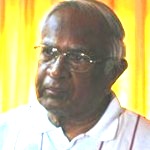
R.M.B Senanayake
This is another hybrid Constitution mixing up the provisions of an Executive Presidency with the Westminster System These are two clear and separate systems of government and they require different provisions. The difference arises with regard to the Executive arm of the State. In the Executive Presidency the Chief Executive is the President who is directly elected by the people for a definite term. He cannot be changed during his term of office unless he is impeached by the Legislature for misconduct. Our present Constitution lays down the functions and duties of the President in Article 133.
Should the Executive which supervises the Administration be entrusted to one person or to a group of persons? Is the unitary executive preferable to the plural executive? The Westminster system has a plural Executive while the Presidential form has a single executive. It is discussed in The Federalist by Alexander Hamilton who argued strongly that unity in the executive can only be achieved by granting the executive power to one person. In the Westminster system the executive power is with a Cabinet of Ministers but each Minister has control over a defined sphere of activity through a Ministry which is a grouping of allied departments or function and each one is responsible to Parliament and to the electorates or the people for the proper conduct of the affairs of his department or Ministry. Their individual responsibility is supplemented by collective responsibility.
 In one line the draft new proposals say that the President is the Head of the Executive and the Commander in Chief of the Armed forces. It is not clear whether he also enjoys all the powers presently conferred on him in Art 133. A new responsibility is cast on him is to “promote national reconciliation and integration, ensure and facilitate the preservation of religious and ethnic harmony and ensure and facilitate the proper functioning of the Constitutional Council and the independent Commissions.” But in the next line it says that the President will always act on the advice of the Prime Minister- a provision common only in the non-Executive Presidency. Who then exercises effective power? What if the President doesn’t agree with the recommendations of the Prime Minister? He can ask the Prime Minister to reconsider and if the Prime Minister doesn’t vary the recommendation then he must accept it. This may be the legal position. But where the President who is the Head of the Executive, feels strongly that he is right he may refuse to compromise and then seek other avenues to vindicate himself. Wont’ this lead to a conflict? We don’t think this division of power is desirable for good administrative leadership upon which the quality of the government and the administration depends. Does he have power to supervise the other Ministers?Read More