

CHOGM – A Carnival Is Coming To Town!
By Sharmini Serasinghe -November 10, 2013 |
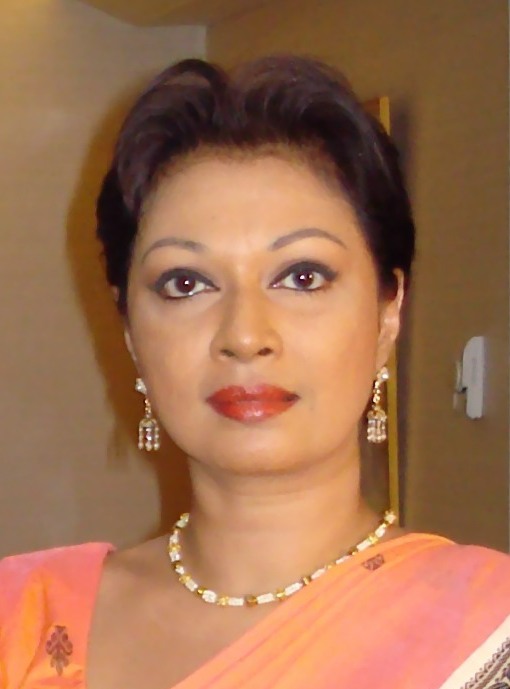
Sharmini Serasinghe
 There is a tangible feeling of an impending carnival-coming-to-town in the air these days in Colombo. The city is being virtually turned up-side-down and inside-out, dusted and vacuumed by the Surgeon General of Lanka’s cosmetic surgery-Urban Development cum Defence - in order to make it look pretty to impress the visiting revelers.
Vibrant coloured banners and gadgets decorate the streets and roundabouts, competing with larger-than-life cut-outs of our very own Emperor-in-new-clothes. Trees pruned and some uprooted, innocent homeless dogs banished, roads re-carpeted and of course the pavements/side-walks dug up and some still awaiting to be tiled. In the interim, pedestrians at great risk to life and limb must share the roads with speeding vehicles.
In short, anything that doesn’t look pretty and prosperous is being removed and pretty-looking-things put in its place.
But this is not just any ol’ carnival coming to town, it’s CHOGM!
One wonders if such a din has ever been made by any other member nation over CHOGM during the entire 64-year history of the organisation..Read More
The Woodpecker And The Banana Trunk
There is a Sinhala proverb that says: “the woodpecker happily pecks away at trunk after trunk, but the day it pecks at the banana trunk it’s beak is stuck”. The reference is to the copiously threaded nature of the trunk of the banana that can entangle any object that pierces it, potentially suffocating the intruder, in this case the woodpecker.
It increasingly appears that in wangling the hosting of the CHOGM, the Rajapaksa regime has been pecking at a banana trunk.
 The regime has so far stridently proclaimed its self-righteousness, and blamed “anti-Sri Lankan” elements for its international woes. By wangling the CHOGM it hoped to whitewash itself and get world attention; to showcase the Rajapaksa glory with its highways, ports, airports and other constructions; to cover up its misdeeds that constitute a long list from corruption and nepotism to ill governance and the denial of the rule of law; to get political mileage for continued ill governance and re-election; and to attract foreign investment worth an estimated US$ two billion.
Rather than any conceivable content of the Commonwealth conference, what has been increasingly gaining world attention are the misdeeds of the regime, most conspicuously war crimes, human rights violations and ill governance. Starting with the boycott by the Canadian prime minister and foreign minister, the regime’s expectations are dwindling by the day. The severest blow is that of the boycott by the Indian prime minister DrManmohan Singh, the leader of the nation most important for Sri Lanka and the Commonwealth. In addition, five Caribbean countries are joining the boycott, and the British prime minister David Cameron is expected to take up the demand for an international investigation into the alleged war crimes.
Contrary to the dreams of the Rajapaksa regime, the world media will be focused on the failings and crimes of the host rather than any substantial proceedings.
The local media, firmly in the regime’s grip, will sing its praises and portray Rajapaksa as a world leader. For the negative publicity it is bound to get, the regime and its agents will blame the west, the Tamil diaspora and the NGOs.
