

TN govt asks Centre to withdraw 1974 agreement with Sri Lanka
PTI | Mar 26, 2013
Replying to a special call attention on the issue in the assembly, chief minister J Jayalalithaa said her government will seek legal course if the UPAgovernment failed to accede to the demand.
The Centre seemed to be of the opinion that fishermen from the state were beyond India, she said while decrying the continued attacks.
In her detailed reply, she said ceding of Katchatheevu had resulted in attacks on Indian fishermen by the Sri Lankan navy as Colombo was not respecting various provisions of the agreement relating to traditional rights.
Citing the Berubari judgement in the Supreme Court in the 1960, she said then West Bengal government had moved the court against ceding it to then East Pakistan and the court had ruled that such ceding could be done only after getting the approval of the two Houses of the Parliament besides constitutional amendments.
"Had (DMK president) M Karunanidhi followed this in 1974 as chief minister, Katchatheevu would not have been ceded to Sri Lanka. He failed to do it," she alleged.
Jayalalithaa recalled that in 2008 she had filed a case in the Supreme Court against the 1974 accord with the state revenue department later impleading in the case.
She said that every time fishermen were arrested, she took up the matter with the Centre and in the last one month, four attacks had been reported.
"Centre should strongly condemn these attacks, and to end these brutal attacks and arrest of fishermen should take diplomatic steps at least now. The Sri Lankan envoy in Delhi should be summoned and protest should be lodged over the attacks.
"Further, I insist that India should immediately withdraw the Katchatheevu agreement. Else, we will place strong arguments in the Supreme Court when the case comes up", she said.
A Response To Professor Savitri Goonesekere’s Response
By S. Ratnajeevan H. Hoole -March 26, 2013
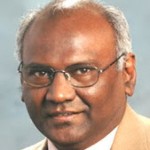
Prof S. Ratnajeevan H. Hoole
 Careless, Ungrammatical, Untruthful Writing
It is not worth arguing with Professor Savitri Goonesekere who is rather careless in her writing, starting with my name, which is not R.S. Hoole. Perhaps she is mixing me up with my great-grand father Modliar R.A. Hoole.
She responds “I have checked my facts.” I say check again. She writes, “Dr. Hirimburegama who has applied for the Vice Chancellor’s post in the University of Colombo is a Lecturer Grade II of this university. I did not make the derogatory remarks that Prof. Hoole suggests I made in reference to Dr. Hirimburegama.”
Untrue! Her exact words in her first article are “It is alleged that both do not possess the academic qualifications required for promotion to the immediately higher grade of Senior Lecturer Grade I in the state university system.” My point is that if he was Senior Lecturer Gr. II in 2005, he had the required years of service for promotion to Senior Lecturer I. It is not possible therefore that he did not possess the academic qualifications for promotion.
Being a lawyer Prof. Goonesekere may argue turning her horrible grammar to her advantage. In saying “both do not possess” I think she really meant “neither possesses.” But now she can say “Yes, Hirimburegama possesses the qualifications but I only said that both do not possess!”
Tenured and Confirmed Posts
Prof. Goonesekere further wrote in a another derogatory remark about Dr. Hirimburegama and the other candidate, “The other two applicants are reported to be Senior Lecturers Grade II, the lowest post in the state university system regulated by the Universities Act 1978.” Lecturer Grade II is not the lowest regulated grade. The Universities Act, if Prof. Goonesekere ever read it while administering University of Colombo as VC, has a lot to say about Assistant Lecturers – now renamed Lecturers (Probationary). To overcome this faux pas, she now claims, “The university system may recognise a lower grade than Senior Lecturer Grade II. However, we are all aware that the lowest tenure track post in the system is Senior Lecturer Grade II. Why or how Dr. Hirimburegama continues in this post I do not know.”
Sri Lanka does not have the American tenure-track and tenure system she writes about, but a similar system with probationary and confirmed posts. In another difference, the Universities Act speaks of Assistant Lecturers eligible for confirmation as Permanent Assistant Lecturers. Tenure-track academics in America are those eligible for tenure and tenured persons are those who have been given tenure. If she meant to use American terms as a matter of style, then she should know that most Senior Lecturers would be seen as tenured and not tenure-track as she calls them; the tenure track Senior Lecturers then would be those who joined newly and have not served three years to be confirmed. While studying in America I do not know if she was aware of things around her. As a former VC if she knows her stuff, she should also know that Lecturer Grade B-04a is a confirmed post. She can call them tenured if she wants to; but not tenure track.
Doctorates and Advertisements
Professor Goonesekere also dismisses the importance of the doctoral degree which is widely recognized as the best training for research. We may expect that from someone who does not have a doctorate and it is not worth rubbing it in. She also makes much of the advertisement which really is an instrument for judging applicants. But the reality is that we appoint the best of the applicants. If we treated the advertisement as an absolute standard many of our VCs, past and present, could not have been appointed.
