

The Parliament Has Spoken
මාස් එල්. යූසුෆ්
 With the swearing in of the Member of Parliament Mr. Mahinda Rajapaksaas the Prime Minister on 26th October
2018, President Sirisena literally placed the whole nation in harm’s
way. Thank God, sanity prevailed and what would otherwise had been a
blood bath was averted.
With the swearing in of the Member of Parliament Mr. Mahinda Rajapaksaas the Prime Minister on 26th October
2018, President Sirisena literally placed the whole nation in harm’s
way. Thank God, sanity prevailed and what would otherwise had been a
blood bath was averted.
The Brussels based International Crisis Group (ICG) had this report filed. “On 26 October, Sri Lanka’s President Maithripala Sirisena abruptly dismissed the prime minister, Ranil Wickremesinghe,
and appointed controversial former President Mahinda Rajapaksa to the
premier’s post, in a move that contravenes the constitution and
threatens to destabilise the country. Rajapaksa’s
appointment has already emboldened his supporters, with their actions
provoking violence. More unrest is likely as the president and the new
prime minister seek to consolidate support. The struggle for power
jeopardises progress on reforms, ethnic reconciliation, and prospects
for peaceful and fair elections in 2019.” (Crisis Group Asia Briefing N°152, Brussels, 31 October 2018).
It further noted that the power struggle now underway between Rajapaksa
and Wickremesinghe has already turned violent, with the new prime
minister’s supporters attempting to stop a recently ousted minister from
entering his office and clashing with his security detail. Risks of
further bloodshed are high, particularly if mass protests by
Wickremesinghe loyalists continue over the coming days.
International Pariah
This move was a rash and negligent act for which the President should be held responsible. Besides
placing the country on the brim of violence, he had by his imprudent
act tarnished the image of one of the oldest democracies in South Asia. He also placed the economic interests of Sri Lanka in jeopardy. Foreign
governments and organisations were reconsidering their economic support
which were linked to democratic governance. The threat of European
Union withdrawing preferential trade benefits, only restored to Sri
Lanka in 2017 was imminent due to the unconstitutional change of power.
The U.S. was urged by the ICG to immediately suspend the process for
final approval of $450 million in economic development funding from the
Millennium Challenge Corporation. Japan was reviewing the loan for the light rail project. In
an unprecedented move ICG also recommended that Governments should
begin to consider applying targeted sanctions against Sirisena,
Rajapaksa, their families and their close associates should Sri Lanka’s
constitutional coup proceed.
Abuse of Power
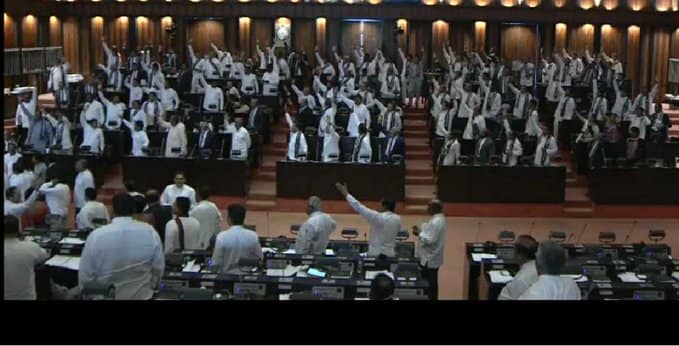
Following the appointment of the new Prime Minister, the alliance of the
dismissed Prime Minister Ranil Wickremasinghe were fully geared to meet
in Parliament. The
institution where they have to test as to who commanded the majority in
the Parliament according to the Constitution. To add salt to injury and
of course, most unethically, President Sirisena committed another act
of impudence by proroguing the Parliament on 27 October 2018. Thereby, depriving the floor test to ascertain majority in Parliament. Political analysts viewed the act of prorogation as a means of buying time to garner support for the new Prime Minister. The President by virtue of the powers vested in him by Article 70 of the Constitution can prorogue Parliament. However,
given the circumstances and the timing of the order to prorogue
Parliament, arguably the question arises if there has been an abuse in
the use of such power.
The President is expected to act not inconsistent with the provisions of
the Constitution and custom or usage. The duties in relation to the
Constitution is stated as follows:
