

Democracy Hijacked; By Whom?

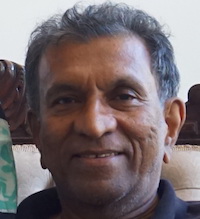
Raj Gonsalkorale
 The
political impasse continues in Sri Lanka, and the country has virtually
come to a halt. The economy, which was in a perilous state before the
dismissal of Prime Minister Wickremesinghe, very likely would have
worsened now. The rupee continues to slide and price of goods are rising
in line with the rupe depreciation.
The
political impasse continues in Sri Lanka, and the country has virtually
come to a halt. The economy, which was in a perilous state before the
dismissal of Prime Minister Wickremesinghe, very likely would have
worsened now. The rupee continues to slide and price of goods are rising
in line with the rupe depreciation.
So, while Sri Lanka is burning, metaphorically, our Nero’s are fiddling.
For the good of the future generations of the country, it is time all
Nero’s took a step back and took stock of the damage they are doing to
the country by their fiddling.
It is time President Sirisena, Mr Mahinda Rajapaksa, Mr Ranil
Wickremesinghe, and Mr Sampanthan by whatever titles they wish to call
themselves, and Speaker Mr Karu Jayasuriya sat together along with other
party leaders, and worked out a solution to the political impasse in
the country and stopped the bleeding that is going on now.
The dismissal of Mr Wickremesinghe as Prime Minister has not been
challenged in the only forum where it can and should be, the Supreme
Court of the country. This gives one the impression that this act was
constitutional or those affected believed it was so. This is just a
logical view and not a constitutional view as Mr Wickremesinghe himself,
as the injured party, should have challenged this Presidential decision
in the Supreme Court if he thought it was not constitutional.
The following clauses in the 19th Amendment to the Constitution appears to confirm that the Presidential decision was constitutional
46
(2) The Prime Minister shall continue to hold office throughout the
period during which the Cabinet of Ministers continues to function under
the provisions of the Constitution
46
(4) Notwithstanding anything contained in paragraph (1) of this
Article, where the recognized political party or the independent group
which obtains highest number of seats in Parliament forms a National
Government, the number of Ministers in the Cabinet of Ministers, the
number of Ministers who are not Cabinet of Ministers and the number of
Deputy Ministers shall be determined by Parliament.
(5)
For the purpose of paragraph (4), National Government means, a
Government formed by the recognized political party or the independent
group which obtains the highest number of seats in Parliament together
with the other recognized political parties or the independent groups.
46 (2) seems to state that if a cabinet of ministers’ cease to function, then the Prime Minister ceases to hold office
The Sri Lankan Parliament approved the formation of a National Government on the 4th of
September 2015 after the UPFA led by the SLFP and the UNF led by the
UNP signed an MOU. So in effect, until the UPFA withdrew from the MOU on
the 26th of October 2018, a National government existed in the country.
Correspondingly, the National government ceased to exist once one party
to the two party MOU withdrew from the MOU. Logical?
If there is no government, one cannot have a cabinet. Logical?
And, as per clause 46 (2) the Prime Minister ceases to hold office if there is no cabinet. Again, logical?
Then the President has to appoint a new Prime Minister and ask him/her to form a cabinet, and hence a new government
The President did so as per clause 42 (2) and appointed Mr Mahinda Rajapaksa as the new Prime Minister.
42
(4) The President shall appoint as Prime Minister the Member of
Parliament, who, in the President’s opinion, is most likely to command
the confidence of Parliament
This clause has been badly worded as it does not specifically and
unambiguously require the Prime Minister so appointed, to seek a vote of
confidence in the Parliament. The words “Presidents opinion”, “most
likely” are neither here nor there and the onus is on those opposed to
the Prime Minister and the government to move a vote of no confidence
consistent with Parliamentary procedures and practices. There is no
ambiguity about exercising this option.
In the current situation, the President has taken a stand that the vote
of no confidence on Prime Minister Rajapaksa has not been done in
conformity with standard Parliamentary procedures and practices.
