

Mr. President, What Happened To The LTTE Cadres Who Surrendered To The Army At Vadduvakal On May 18, 2009?


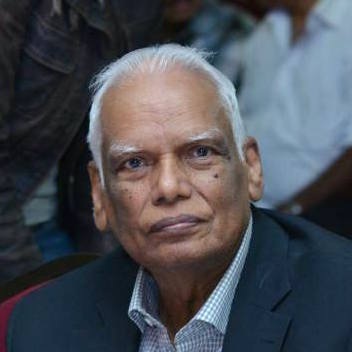
Veluppillai Thangavelu
Hon.Maithripala Sirisena
President
Presidential Secretariat
Galle Face,
Colombo 01.
President
Presidential Secretariat
Galle Face,
Colombo 01.
What Happened to the LTTE Cadres Who Surrendered to the Army at Vadduvakal on May 18, 2009?
Your Excellency,
The UN Human Rights Council had adopted Resolution No.30/1 of October 01, 2015 and co-sponsored by Sri Lanka that called for an international investigation into war crimes with foreign judges, prosecutors and investigators. Clause 6 of Resolution 30/1, inter-alia, states as follows:
‘Welcomes the recognition by the Government of Sri Lanka that accountability is essential to uphold the rule of law and to build confidence in the people of all communities of Sri Lanka in the justice system, notes with appreciation the proposal of the Government of Sri Lanka to establish a judicial mechanism with a special counsel to investigate allegations of violations and abuses of human rights and violations of international humanitarian law, as applicable; affirms that a credible justice process should include independent judicial and prosecutorial institutions led by individuals known for their integrity and impartiality; and also affirms in this regard the importance of participation in a Sri Lankan judicial mechanism, including the special counsel’s office, of Commonwealth and other foreign judges, defence lawyers and authorized prosecutors and investigators.’
Despite the fact that Sri Lanka co-sponsored Resolution 30/1, the President, as well as the Prime Minister, has stated publically that Sri Lanka’s constitution does not permit foreign judges to operate in the country. This raises the question of why Sri Lanka sponsored Resolution 30/1 in the first place?
“I have shown the strength of my backbone, two weeks ago, the UN Human Rights chief had said Sri Lanka must have international judges in the accountability mechanism. The following day, I had the guts to dismiss it,” you said while addressing the Executive Committee meeting of your Sri Lanka Freedom Party (SLFP) held here on March 03, 2017.
You have repeatedly claimed on public platforms that you have put an end to the arguments and discussions over the issue of bringing foreign judges for the proposed judicial mechanism to investigate the allegations of war crime and human rights violations by convincing the international authorities and its leaders that such process is not needed in Sri Lanka.
The International Truth and Justice Project is deeply concerned that Sri Lankan President Maithripala Sirisena appears to be rolling back on his commitment in Geneva to include international involvement in a future judicial mechanism. In an interview with the BBC, the President reportedly stated, “I will never agree to international involvement in this matter.”
“We have more than enough specialists, experts and knowledgeable people in our country to solve our internal issues, this investigation should be internal and indigenous, without violating the laws of the country, and I believe in the judicial system and other relevant authorities in this regard.
“The international community need not worry about matters of state interest. I will never agree to international involvement in this matter. This flies in the face of the recommendation of the UN High Commissioner for Human Rights that Sri Lankan establishes “an ad hoc hybrid special court, integrating international judges, prosecutors, lawyers and investigators”.
High Commissioner Zeid Ra’ad Al Hussein has been very clear about the “total failure of domestic mechanisms to conduct credible investigations” in Sri Lanka.
Though the President occasionally mentions about accountability and reconciliation between various communities, especially between the Tamils and Sinhalese, such political reconciliation is not possible unless members of the armed forces who committed war crimes are brought to justice.
“If communities that have been torn apart by decades of violence and impunity are to be reconciled, the Sri Lankan government should initiate internal reforms and seek international assistance to prevent ongoing violations and ensure real accountability for past abuses,” said Sam Zarifi, Amnesty International’s Asia-Pacific director.
There have been numerous massacres of innocent Tamil civilians during the war that lasted for several decades. A senior Sri Lankan army commander and the frontline soldier told Channel 4 Newsthat point-blank executions of Tamils at the end of the Sri Lankan civil war were carried out under orders. One frontline soldier said: “Yes, our commander ordered us to kill everyone. We killed everyone.” And a senior Sri Lankan army commander said: “Definitely, the order would have been to kill everybody and finish them off. I don’t think we wanted to keep any hardcore elements, so they were done away with. It is clear that such orders were, in fact, received from the top.”
The Human Rights Watch in a lengthy Q & A write-up on Human Rights stated as follows:
