

What Next? Some Thoughts On The Post-NCM Vote
Sumanasiri Liyanage
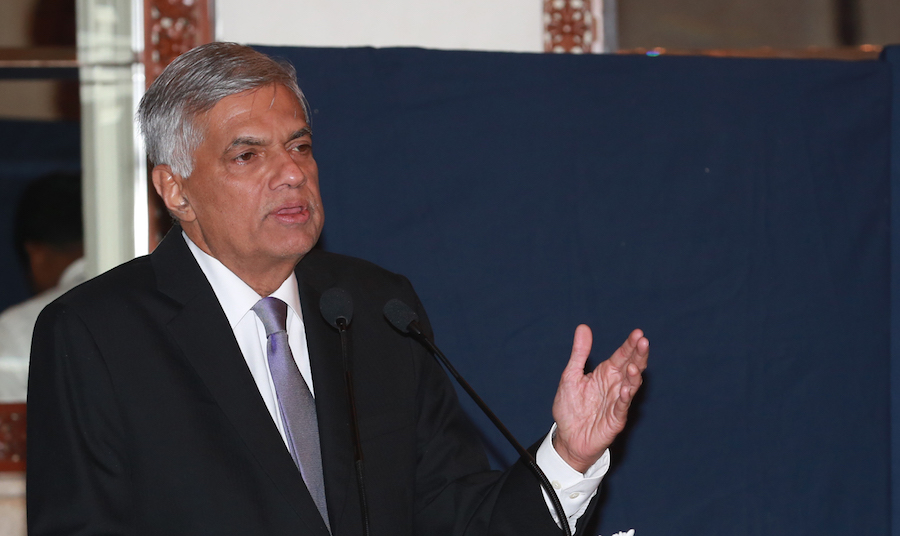
 My good friend, Prof Jayadeva Uyangoda’s recent article in Colombo Telegraph has shown the total bankruptcy of the liberal bourgeois reading of the current political situation in Sri Lanka. His reading and reasoning are instrumental in the sense that it aims at proving that the January 8, 2015 agenda is the best available option for Sri Lanka. Following the old adage, “gilenna yana miniha piduru gaheth ellenawa” (a person who is going to drown will hang even into a straw), liberal bourgeois analysis tends to prescribe that the January 8, 2015 agenda be revitalized at the event of the Prime Minister Ranil Wickremesinghe’s victory on April 4 over the no-confidence motion (NCM) moved by the Joint Opposition. Hence, Prof Uyangoda has once again raised their hopes and expectations that the January 8, 2015 agenda can be implemented in the next eighteen months if we cease this new opportunity. The no-confidence motion was defeated in the Parliament by 46 votes. All the MPs of the United National Front (UNF) voted against the NCM in spite of some signs of dissidents when the NVM was moved. The Tamil National Alliance, and the two Muslim Parties voted with the UNF ensuring the Prime Minister’s victory. One of the key partners of the January 8, 2015 movement, Janata Vimukthi Peramuna (JVP) voted for the NCM. In spite of the JVP decision to distance itself from the other actors of the January 8, 2015 movement, one may with some justification wonder that the defeat of the NCM has created once again a space to rekindle the principal items of its agenda.
There is no doubt that the defeat of the NCM has somewhat changed political configuration in the Parliamentary sphere of politics. Of course, the April 4 vote is a tactical victory for the Prime Minister. He has shown time and again that he has been capable of dampening the opposition to his leadership by using the UNP constitution and deviating the attention of his dissidents. Some of his dissidents may be promoted to positions in the Cabinet but the control of the party would remain basically intact. PM’s position within the UNP may get strengthened as the victory over the NCM has raised the self esteem of the UNP and its members vis-s-vis the SLFP, its governmental partner. Nonetheless, it is incorrect to come to a conclusion that this victory at the parliamentary sphere reflects change of political configuration at the mass politics level. The Sri Lanka Freedom Party (SLFP) experienced in the course of the NCM its third split since 2014. While the PM and the UNP wing of the so-called national government is able to get an upper hand in the Cabinet and the unity government in the next 18 months, the President Maithripala Sirisena’s position would get more and more weakened as a consequence of the NCM vote. If the 16 SLFP dissidents are forced to leave the Cabinet and the government, his position in the Cabinet equation would get further weakened and he will be reduced to de facto nominal executive his remaining constitutional powers notwithstanding. In my opinion, reflecting on his action and performance in the past three years, President Maithripala Sirisena deserves this dismal situation he is in today.
It is interesting to note that the liberal analysis assumes that these changes in political configuration in the Parliamentary arena would be conducive to quick implementation of constitutional reforms, legal actions against corruption, full adoption of human right resolution and substantive economic reforms. It appears that this view is also shared by the so-called international community (i.e Western powers) and the Colombo civil society. Although the PM’s victory is substantial, it was achieved at a reasonably high cost.
