

Transatlantic Pride: Sri Lankan Internationalism
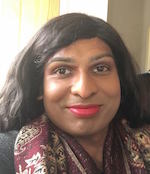
Dr. Chamindra Weerawardhana
 This year’s Pride festivities across the world have now come to a conclusion. As a member of the LGBTQIA+ community, as a Trans woman of colour, this writer always had a problematic relationship with Pride. As many other activists, artists, knowledge creators and thinkers in the worldwide Trans community (including high-profile figures such as Laverne Cox) have highlighted time and again, Pride is not a place that generally opens space for people of colour or for critical thought. Instead, it is a highly commercialised neoliberal venture, where big businesses come out to capitalise upon LGBTQIA+ rights discourses. Pride events are also places where substantive racial hierarchies operate, where cisgender white gay men have priority, with groups such as Trans women of colour, differently-abled people, Indigenous people and many other groups being near-obliterated. Having lived and worked in several EU member states, this writer long had a policy of categorically boycotting Pride.
However, this year proved to be a different kettle of fish.
Pride of the Left?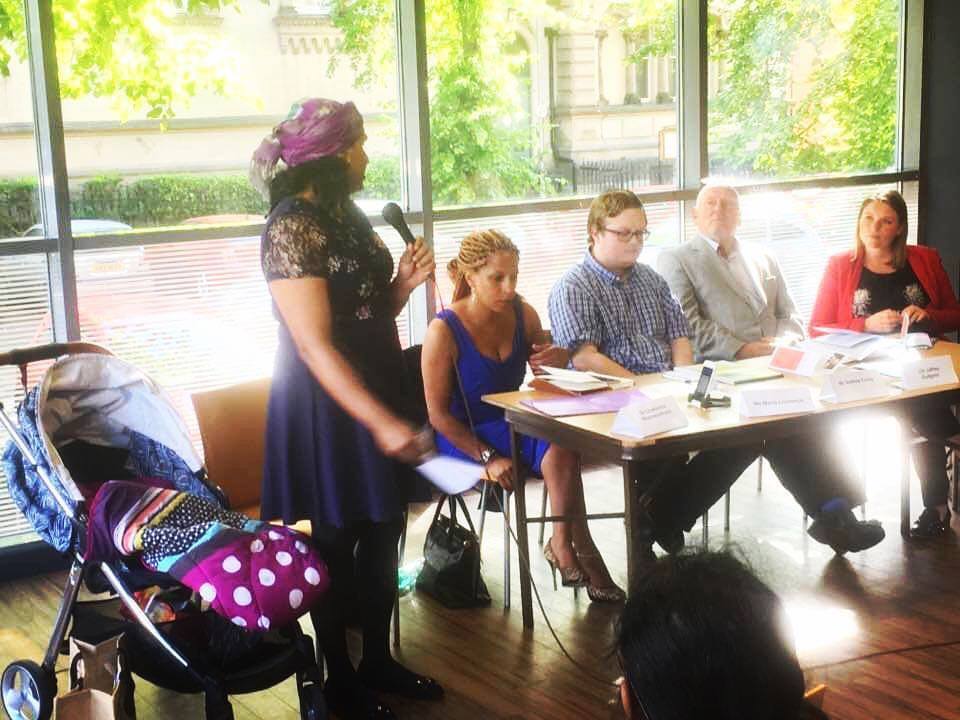
Above: Dr Chamindra Weerawardhana [standing, left] presiding over the Pride Event of the Labour Party in Northern Ireland, Belfast, 3rd August 2017.
As the LGBTQIA+ Officer of the Northern Ireland branch of the British Labour Party, this writer convened a 2017 Pride Committee, which prioritised an intersectional and inclusive approach as the key defining feature of our contributions to Belfast Pride 2017. This involved, first and foremost, raising awareness about the problems associated with a neoliberal, highly commercialised and market-oriented Pride celebrations. Our focus, instead, was on the fact that Pride was originally a protest campaign, launched by Trans women of colour such as the late Marsha P Johnson and Sylvia Riviera. Pride is a struggle for equality, dignity and justice. Our objective was one of reviving this protesting and critical spirit of pride. This concept led to a signature pride event on 3rd August 2017, which brought together a cross-cutting dialogue. The event featured speakers from different backgrounds, Maria Lourenço, the first-ever black woman to stand for public office in Northern Ireland, Andrew Farley, a leading LGBTQIA rights activist, Jeffrey Dudgeon, a politician and senior community leader who, in 1982, single-handedly took Northern Ireland to the European Court of Justice on the discrimination of LGBTQIA people, and Helena Wilson, a senior barrister specialising in LGBTQIA+ migration issues.
