

Govt. Information Dept In Haphazard Release Of Historic Material

The Government information Department has released a large volume of historic photographs, films and documentaries in a manner completely contravening the purpose of digitalization.
The move which was welcomed by many initially, ended up with many users complaining regarding the haphazard manner in which the digital portals could be used. It is unclear if the Government had paid a private entity to conduct the process.
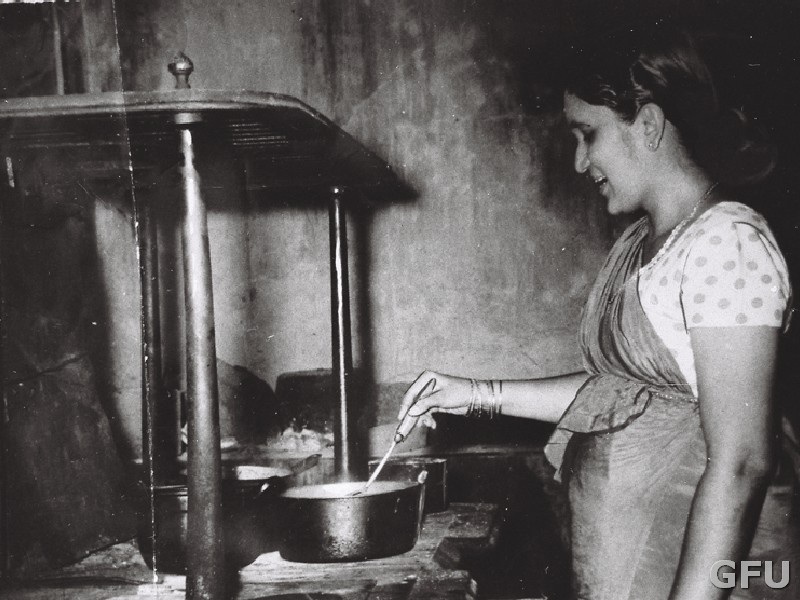
No description, only a number – 00128
Uploading the historical collection to the internet the director general of the government information department on September 18th on his Facebook said: “Historic pictures of ancient Sri Lanka. We released 1000 such pictures today as the first step to the internet. Please visit www.dgi.gov.lk and enjoy historic documentaries and pictures.”
Going through the archives of Government information department website one can find 692 pictures and 120 documentaries without any logical categorisation.
A photograph has much greater historical value if information is available about where and when it was taken and about any people in the photograph. The description of the main contents of the image is key information that can be searched to find photographs about certain subjects. But in government information department archives there is no description – when, where, who, photographer etc. associate with photographs, no logically structured order, bad image quality – most of them are in lossy compression and the selection methodology is not clear. Very few photographs associate with a descriptions like, Swrd. Bnayake with governor Oliver G Tilake, Swrd. Bnayake Harbar, Swrd. Banayke exhibition, Dalrajapakse group1 and all other pictures associate with a image number.
With regard to the films and documentaries, a very limited description is associated with each of them in only Sinhala language, while both Sinhala and Tamil languages recognise as official language.
“It seems they have not developed a selection policy for digitization,” an expert of archiving photographs and documents told Colombo Telegraph.
“For instance they don’t know even simple guidelines. They should have asked simple questions such as: Is the material in a coherent, logically structured order? Is it paginated or is the arrangement suggested by some other means? Is it complete? Is there adequate descriptive, navigational, or structural information about the material, such as bibliographic records or a detailed finding aid? What kinds, level, and frequency of use are envisioned? Is there a clear understanding of user requirements? Can digitization support these uses? Will access to the material be significantly enhanced by digitization? Can our institution support a range of uses, e.g., printing, browsing, detailed review?, Access restricted to certain people or use under certain conditions?,” he said.
