

Viyath Maga: Who Are Intellectuals & Where Are They?

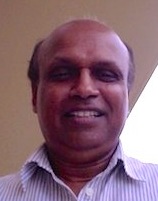
Dr. Siri Gamage
The term intellectual is often used in the Sri Lankan media particularly in the context of political reporting. For example, Shyaman Jayasinghe questions the use of this word in a recent meeting organised by Viyath Maga this month in Boralasgamuwa, Sri Lanka (Colombo Telegraph March 11, 2017). At other times, especially before Presidential or Parliamentary elections, some university academics affiliated with major political parties appear on stage or in press conferences as ‘intellectuals’. Does the media use this term correctly? Who are the intellectuals? What should be their defining features and role? Has this term been vulgarised in the Sri Lankan context to mislead the voting public? If so, where are the true intellectuals? These are some questions we need to discuss due to the ‘incorrect usage’ of this term in the popular media today.
Intellectual is one who uses his/her intellect for articulating contemporary issues in society from a historical, political, sociological, cultural and other perspectives for the benefit of the humankind and possibly policy and decision makers who do not have the time, training or capabilities to grasp the nature of such issues together with a vision for their solutions. Thinkers who are able to grasp long term trends in human society and its culture or various sub systems and predict multiple possibilities/solutions for the human kind whether in a given nation, region or the world also deserve to be called intellectuals. Intellectuals can also be innovators and/or specialists in various fields but unless they are proposing something generally applicable to the human society, he/she could be called a ‘specialist’ rather than an ‘intellectual’.
Intellectual is someone other than the average Jo bloke on the street, a functionary in a government administration, a university academic who reproduces knowledge inherited from his/her teachers and old textbooks imported from the West, or a journalist who performs his/her normal duties of reporting. An intellectual ought to be presenting a view, proposition, argument, theory or a perspective that is insightful, illuminating, cutting edge, or contributing to present understandings in an original way. This is quite different from pumping out jargon, a position, ideology or an argument on behalf of a political party or an organisation of professionals. Intellectual is also different from those holding positions such as academics, professionals, politicians, businessmen/women, clergy or others who carry various titles. He/she should be holding an intellect that is acquired after a sustained period of systematic study of a subject and able to articulate a vision and all other things mentioned above in an easily understandable way. However, we have to recognise that all intellectuals are not good communicators. Similarly, all good communicators are not intellectuals.
Quoting other sources, Wikipedia defines intellectual as ‘a person who engages in critical thinking, research, and reflection about the reality of society, and proposes solutions for the normative problems of society, and thus he or she gains authority as a public intellectual. It also state ‘Coming from the world of culture, either as a creator or as a mediator, the intellectual participates in politics, either to defend a concrete proposition or to denounce an injustice, usually by producing or by extending an ideology, and by defending a system of values’ . The distinction between intellectual and public intellectual is an important one as some intellectuals can be armchair thinkers who do not convey his/her ideas that well for public consumption, do not engage in public debates at a given point in time or even does not propose a course of action associated with their new ideas or vision. A public intellectual is one who does not accumulate knowledge, insights and understandings for his/her own use but shares such things with the general public or different audiences for the common good in a non-threatening way. By doing so, he/she introduces changes in society, culture, ways of thinking and acting, starting new movements and the like. In short, such intellectuals become leaders manifestly or latently while defining moments of history, social trends, political upheavals, common parameters for human progress, and pin point wise paths for human coexistence and development in a holistic sense. Visionaries who provide leadership for various organisations including those which serve the interests of the least advantaged in societies can also be intellectuals. Karl Marx is considered an intellectual because he advocated a different way of interpreting society, social struggles, etc. from a historical and class perspective. The Buddha is considered an intellectual for developing a critique of existing religious thought at his time and proposing a new way of understanding human suffering, its causes and a way for human liberation. There are many other notable intellectuals recorded in human history and even today contributing their thoughts in various fields.
Merriam- Webster dictionary defines intellectual as referring to the intellect and its use, guided by the intellect rather than by emotion or experience, given to study reflection and speculation, and engaged in activity requiring the creative use of the intellect. According to the Cambridge Dictionary, an intellectual is ‘a very educated person whose interests are studying and other academic activities that involve careful thinking and mental effort’. We can find other characterisations of the term in various dictionaries and publications but these few are sufficient to get us thinking and reflecting on this topic with a view to correcting media usage in Sri Lanka.
