

SRI LANKA: CONTINUING UNWILLINGNESS TO ADDRESS IMPUNITY REINFORCES THE NEED FOR A HYBRID COURT – ZEID
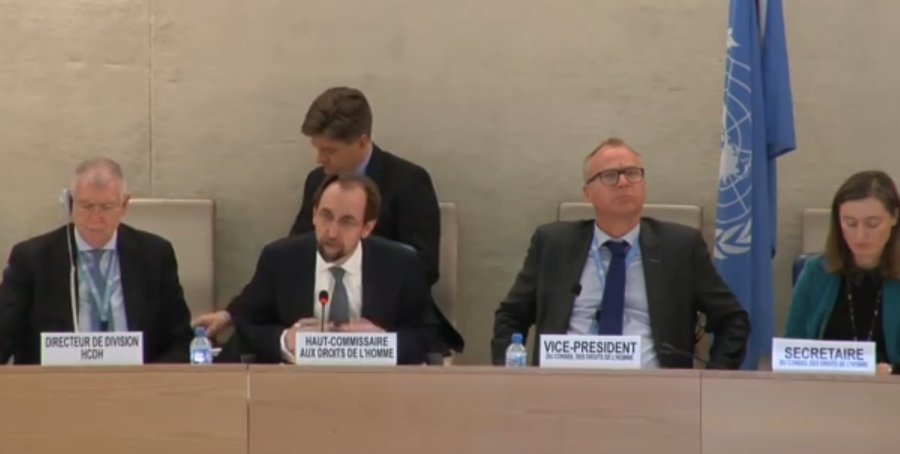
Rights commissioner Zeid making his final remarks.


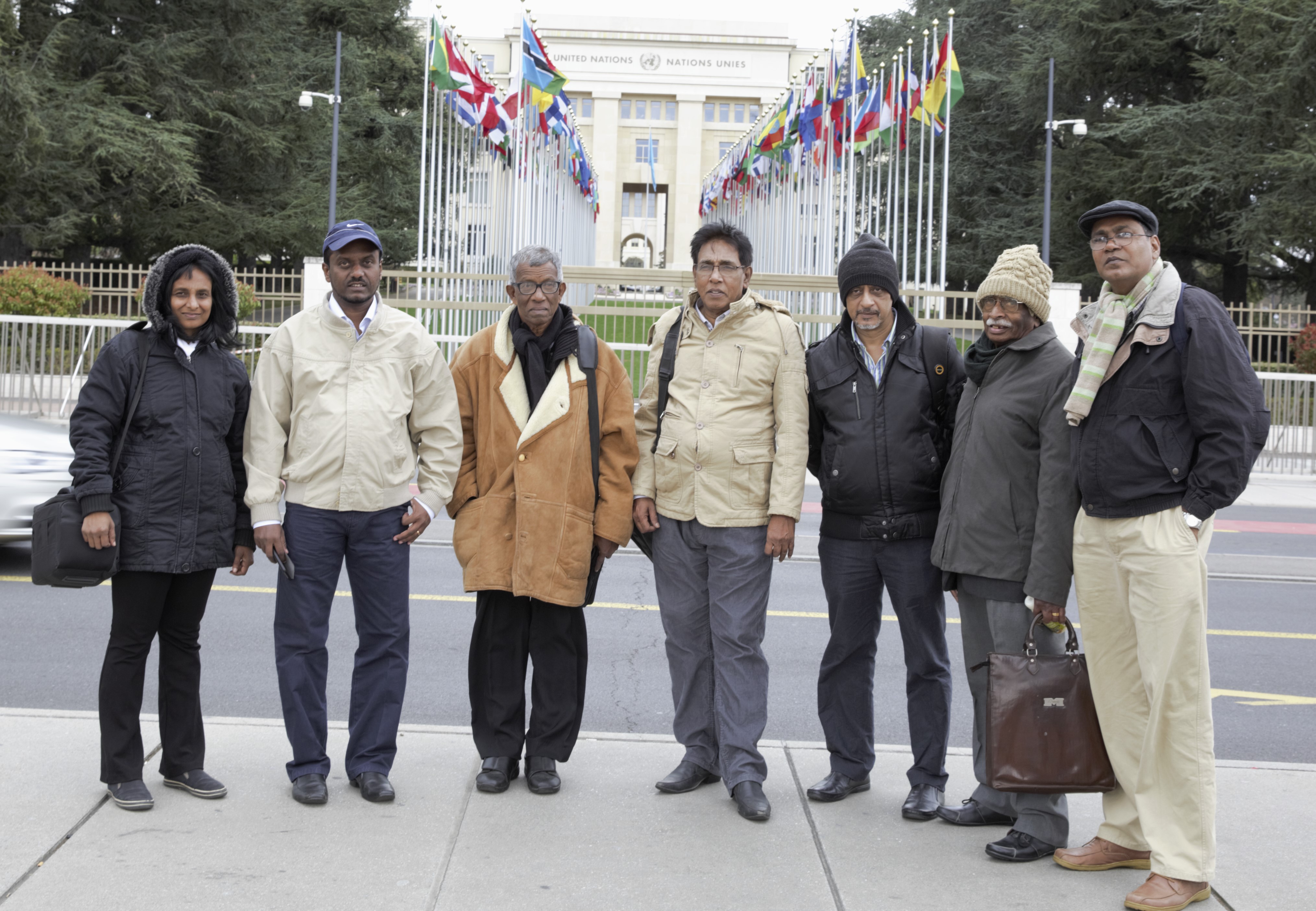
Image: A group of Sri Lankan HRDs attending HRC 34 ©s.deshapriya.
The Council then held an interactive dialogue on promoting reconciliation, accountability and human rights in Sri Lanka.
Zeid Ra’ad Al Hussein, United Nations High Commissioner for Human Rights, presented his report pursuant to Human Rights Council resolution 30/1 on Sri Lanka, saying there were some positive advances in some areas, yet noting that progress to establish transitional justice mechanisms had been slow. A number of measures must be accelerated, including the repeal of the prevention of terrorism act and the design of truth and reparation processes. Continuing unwillingness or inability to address impunity reinforced the need for international participation in a judicial mechanism. That mechanism should include a special counsel, foreign judges and defence lawyers, and authorized prosecutors and investigators. At the centre of all of the efforts were the victims: there could never be sustainable peace without justice for them.
Sri Lanka reiterated its resolve and commitment to the reconciliation process and announced it planned to co-sponsor the resolution on Sri Lanka, which included a two-year extension for the timeline for the implementation of its commitments. Sri Lanka expressed its commitment to continue its engagement for the benefit of its people, working to promote and protect human rights. It recognised the need to strengthen its institutions and achieve economic progress. It affirmed the country’s firm position to enhance the fundamental rights of all the citizens as equals in a free and democratic country, where the reconciliation process recognised the impact of conflict on all citizens, independently of their origin or status.
MIDDAY
22 March 2017
The Human Rights Council in its midday meeting held separate interactive dialogues on the situation of human rights in the Democratic Republic of the Congo and in Sri Lanka under its agenda item on technical assistance and capacity building. Andrew Gilmour, Assistant Secretary-General for Human Rights, noted that there was an increase of about 30 per cent of human rights violations in 2016 in the Democratic Republic of the Congo compared to 2015. The increase could be explained by two factors: violations related to restricting democratic space and the resurgence of activities of several armed groups. The Office condemned the use of violence by demonstrators during public gatherings or marches. At the same time, security forces had to use force only as a last resort and in compliance with the principles of necessity, proportionality and legality, when facing an immediate threat. The Office urged the authorities to urgently adopt the law on freedom of peaceful protests and the law on human rights defenders. The Office was also deeply concerned about violence in what the Government had termed “non-conflict zones.” The killings, injuries, destruction of property and other documented violations in the Kasais and Lomani provinces in the context of the Kamuina Nsapu crisis, represented a serious threat to peace in the country.
