

Selection Criteria For Prospective MPs

By Somapala Gunadheera –March 21, 2017
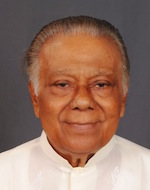
Somapala Gunadheera
I wish to draw the attention of all public-spirited citizens to the following extract in the Island Editorial of March 13, under the topic, “Speaker’s plight”,
“The most effective way of addressing the problem of the deterioration of political institutions is to end the deplorable practice of nominating unsavoury elements to contest elections, which they win by spending a fraction of their black money to bribe voters. The blame for this sorry state of affairs should be apportioned to all political leaders.
Let the political party leaders be urged to clean up the mess they themselves have created; they ought to introduce selection criteria for candidates in time for the next election instead of beating their chests”.
Some criteria have been laid down in our Constitution on nomination of candidates at Parliamentary elections. Article 90 states, “Every person who is qualified to be an elector shall be qualified to be elected as a Member of Parliament unless he is disqualified under the provisions of Article 91. Disqualifications under Article 91 pertain to concurrent nominations, dual citizenship, holding of public office, interests in contracts with the State, bankruptcy and conviction for bribery. Other disqualifications shared by a prospective candidate with the voters pertain to citizenship, age of majority, sanity, imprisonment for specified offences, civic disability and refusal to appear or produce documents before a Special Presidential Commission of Inquiry etc.
It is evident that deterioration in politics has raised its ugly head despite the applicability of the above restrictions. Hence the causes for the current mess in politics have to be sought outside those specified already. The task before election reform is to identify the hitherto before unlisted disqualifications that have resulted in the present sorry state of affairs. I wish to place the following areas as a tentative agenda for discussion by public spirited citizens who consider it their duty to cleanse the Augean Stables of local politics.
Age
Every citizen who has attained the age of eighteen years is eligible to be nominated as a candidate at an election. So far we have not come across candidates coming forward to contest an election at that minimum age. But the performance of those close to the bottom-line, both inside and outside Parliament, has left the impression that their services could have been more effective had they been more advanced in age and more experienced in practice.
It would appear that it is even more important to fix a maximum age level for candidates seeking entry to Parliament. The lower limit of the age of a candidate for the Presidency has been fixed 17 years above the minimum. This variation is indicative of the need of maturity on the part of those who wish to play the leading role in the political life in this country. In my own view the ideal minimum age of a prospective MP should be 30. The chances however, are that such an amendment may not be feasible in practice.
Even if an age limit, above the minimum applicable to voters, cannot not be laid down for candidates, it would be wise to fix higher levels for those who are to be entrusted with additional responsibility and power. Now that the minimum age for a candidate for the Presidency has been fixed at 35, it will not be practicable to fix a higher age for a Parliamentarian. By and large, there are two levels of executive power in Parliament, the ministers and their deputies. It is proposed that the age level for the higher grade be fixed at 35 and the deputies’ limit at 30. Performance levels can be optimized if it was possible to increase these limits by another 5 years at least. Fixing a minimum age limit for ministers and deputies would also control the scramble for portfolios, bringing our mammoth Cabinet within civilized standards. At the same time, the move will act as a barricade against greenhorns who aspire to use their connections to handle portfolios in which they are out of depth.
Youth and inexperience are not the only reasons that have downgraded performance in Parliament. While some members are ‘wet behind their ears’, at the other end of the scale are found others who are ‘long in their years’. Politicians are not governed by retirement limits. Most of them keep returning until they are finally thrown out by the electorate. That happens only after the voters reach the end of their tether. In the meantime, public interest does not receive the optimum benefit from the investment of funds to keep such hangers on tottering, while eminently suitable substitutes, fully qualified to replace them, fade away.
It was only the other day that an MP remarked that some members of Parliament need the assistance of their colleagues to reach the seats assigned to them. Accommodating them at the expense of efficiency is unfair by the people. Listening to their trembling voices on the electronic media, one wonders how they could deliver the goods expected of them effectively. Organized employment systems have a set age for retirement. That is but a natural outcome of the basic rules of biological decay. Politics is supposed to be a service rendered to the nation by public-spirited volunteers. If politicians mean well, they owe it to their conscience to quit when they are no longer physically fit to do their job satisfactorily, particularly in the presence of thousands, fiddle fit to take on.
It was only the other day that a Sri Lankan settled in New Zealand had made the following comment quoting a news item in the NZ Herald of the 15th March. “The very popular Prime Minister John Key, has resigned after serving almost three terms, as he wants fresh air to enter the legislature for good governance. He will resign as a Member of Parliament next week and retire with his head held high. Neither he, nor others, consider Parliament as a place for employment or that they should stay there for all time. As the news item spells it out, many Parliamentarians will not seek re-election having served the people. They did not serve themselves, nor bleed the country. They enjoy no pensions”. One wonders as to how many coconuts we would have to break to achieve that ideal in this country.
