

What Do We Own ?

By Ranil Senanayake –February 15, 2017
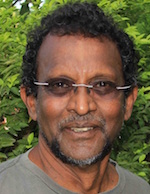
Dr Ranil Senanayake
Land provokes visceral reactions. It is said that the land you are born in creates an indelible identity in a person and of course land has been the basis of innumerable wars fought by humanity. Property or individual ownership land has diluted this sense of ‘place’ as defined by land. But, while the commodification of land has become a feature of ‘development’, it seems difficult to erase those links of identity. It was the loss of our right to land through the infamous ‘waste lands ordinance’ that evoked such fierce resistance in the 1980’s. Now, as we stand on the brink a repeat of that tragedy, it is incumbent for all Sri Lankans to question both the motive and the right of the current crop of political leaders. A fundamental question that arises in the modern context is “ Can a person elected for five years, negotiate away the rights of many generations of our children? Thomas Jefferson, a President of the United States of America, asked: “Can one generation bind another and all others in succession forever? He also answered this question, “I think not. The Creator made the earth for the living, not the dead”. We could extend this notion of intergenerational responsibility and ask ‘can a politician, elected for 5 years, give away the land rights of five generations to come?
In a nation whose forefathers had created one of the most sophisticated water management systems as a gift to future generations, the current rush to hand parts of our land to various foreign entities, not questioning for a moment, their intent and the poisonous processes that they will bring to our nation, can never be accepted as a patriotic move. In fact such a process is just the opposite. The ultimate act of betrayal of a nation is for its leaders to sell the birthright of its citizenry. Access to clean land, access to clean air, clean water and safe food is our birthright no amount of political ‘spin doctoring’ can change that.
The landscapes of Sri Lanka are unique, an island with central mountains to catch the rain and drain it radially to a sophisticated system of about 30,000 reservoirs in the lowlands. An amazing engineering effort that created sophisticated ‘cascades’ of reservoirs an agricultural and engineering effort not seen anywhere else in the world. The long history as human association with the land resulted in the evolution of stable agroecosystems that maintained agricultural sustainability. The ability of such systems to co-evolve whilst maintaining core functions is referred to as socio-ecological resilience. Our farming communities maintained this resilience until the advent of ‘modernization’. Where the traditional agricultural landscapes were dispensed with to promulgate the modern ‘green revolution’ with its consequences of non-communicable diseases, loss of sustainability and loss of biodiversity.
This loss is encapsulated in N&H Harrison’s conceptual art piece on Sri Lanka:
“ Yet in some places the buffalo and its wallow still continue
their several thousand-year-old discourse
their collaboration
and one of the consequences of redirecting their discourse
into the technological monologue
will be a peculiar subtraction of possibilities
For gone will be the fish
That eats the larvae of the Malaria mosquito
While itself serving as a source of protein
And gone will be the vermin eating snake
That breeds in the wallows surrounds”
Yes, it is true that much of the landscapes that made this land resplendent have been turned into fields of commerce. Their sustainability traded for corporate profit. The mountain forests were opened up for ‘investment’, much in the manner that our land is currently being offered up for investment. The consequence of changing the montane ecosystems was realized even at the moment of their destruction. Fredrick Lewis an early Coffee planter describes the morning after the forests were set alight:
“When morning broke upon the day following the events recorded at the conclusion of the last chapter, I found myself gazing upon a scene not altogether unfamiliar to me. All around me lay hundreds of charred black logs, stumps in fantastic shapes and outlines: fallen branches, broken and distorted by fire: cinder heaps, and little rivulets of sodden ash: all indicative of the fierce, merciless fire that but a few weeks ago, had raged over a spot that so lately had been a beautiful forest land. It was now a blackened wilderness, to be changed into fields of coffee, by the labour and patience of man. A strange picture; fascinating in one respect: fearful in another and yet so full of a strange mixture of possibilities was this wild heap of ruins, this uncouth mass of slaughtered giants of an inarticulate, yet eloquent world, to be transformed by, industry in the pursuit of fleeting wealth.”
It was for this end that the lands of the peasants and the farmers preserved and protected for millennia became destroyed. These forests were not just ‘waste lands’ as the Rt.Hon. D.S. Senanayake pointed out :
