

Thomas More’s Advice On War & Peace: Part IX


Dr. Laksiri Fernando
“There is nothing more inglorious than that glory that is gained by war.” – Thomas More
When it comes to conflicts, humans are more brutal than animals, and ‘war’ is the perfect example for this situation. War might become an unavoidable necessity under certain circumstances, but that is not a reason to boast about it. What most Thomas More said about war and peace in Utopia applies to our own situation in the recent past in Sri Lanka facing one of the cruelest internal wars in the world. More was against keeping a large army in peace time. It is not only a burden on the national coffers, but the society is at the risk of many social ills. “As robbers prove sometimes gallant soldiers, so soldiers often prove brave robbers,” he said. How many ‘war heroes’ have become robbers in Sri Lanka? The newspapers are often replete with these news.
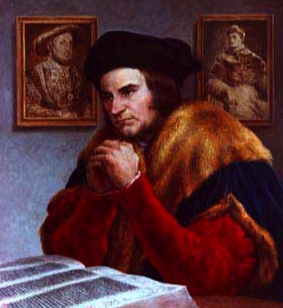
Thomas More
How far Thomas more got these ideas from ancient Sri Lanka is questionable, although the main argument of the book on ‘Thomas More’s Socialist Utopia and Ceylon (Sri Lanka)’ has been that he was influenced by the information he received from Ceylon through a Portuguese traveler at the beginning of the 16th century. Here we publish the chapter seven on ‘Opposition to War’ as part of the series courtesy of Colombo Telegraph and Sri Lanka Guardian. The publication link to the original is: https://www.createspace.com/4688110
OPPOSITION TO WAR
“If no one fought except on his own conviction, there would be no wars.” – Leo Tolstoy[1]
THE BOTTOM LINE of Thomas More’s argument about war is that it is a ruthless thing. Referring to the Utopians, he said, “They detest war as a very brutal thing; and which, to the reproach of human nature, is more practiced by men than by any sort of beasts.” In this sense the Utopians are different to “all other nations and think that there is nothing more inglorious than that glory that is gained by war.” Nevertheless, they do prepare for any inevitable war by asking both men and women to get training in war and military discipline because others are inclined to war. There are daily military exercises for this end.
There is also some imbalance or even contradiction in what More said about war. In Book I, it is mainly a theory of war or its brutal nature and dubious motives behind why wars are executed by the Kings or the rulers. But it was different when he came to Book II or the Utopia proper. While arguing that the Utopians detest war, he also showed why the war is inevitable giving more than four five reasons. Here there is a just war theory.
Critique of War
In Book I, during the dialogues between More, Giles and Hythloday, war took a prominent place of the discourse and the general tendency was to condemn all wars whether they are internal or external. The war was condemned as a cause of poverty, misery and crime. “Many lose their limbs in civil or foreign wars,” Hythloday argued. The examples given were the Cornish rebellion and the wars with France, arguing that “who being thus mutilated in the service of their King and country, can no more follow their old trades, and are too old to learn new ones.” It was also said that “wars are only accidental things, and have intervals,” and therefore it was proposed that long term solutions to the issues of poverty, injustice and crime should be discussed.
The language used in this discussion was quite strong and deterministic. Referring to France, or even meaning England, it was said “there is yet a more pestiferous sort of people, for the whole country is full of soldiers.” But they are “still kept up in time of peace.” Then asked the question: “Can such a state of a nation be called a peace?”
