

Sri Lanka’s Future

By Imtiyaz Razak –February 4, 2017
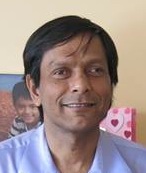
Dr. Imtiyaz Razak
Sri Lanka (known as Ceylon until 1972) a small island in the Indian Ocean is situated at the foot of the South Asian subcontinent celebrates its transfer of power from the British colonialists on Feb. 04, 1948. Many Sri Lankans and their elites as well as politicians called it independence day. I call it the day of transfer from white elites to local brown elites and their politicians.
The question is what has Sri Lanka gained in the last six decades? There is no better answer, but the country’s modernization processes polarized people at masses level along ethnic and religious lines. The youth rebellion from the South mainly by Sinhalese [the majority ethnic group] led by People Liberation Front [known as the JVP] both in 1971 and 1987-89 and the Tamils led by the LTTE [known as the Tamil Tigers, from 1977-2009] crippled the country’s progress. The rebellions mainly by young and poor youths from both communities suggest that modernization program failed to generate conditions for ordinary people to have better life despite the fact that the country has provided sophisticated welfare services to its people regardless of their ethnic and religious loyalties.
Sri Lanka is a beautiful country. I love it because that is the ONLY country I can call it proudly as my country. But it’s profound failure to generate trust among common people triggered tensions and thus paved the way for conflicts and wars. Though the country’s military tensions between Tamil Tigers and the government came to an end in May 2009 with the disproportionate casualties among Tamils, a significant portion of the Tamils in the North and East think that the regime in Colombo fails to deliver peace to them.
On the other hand, Muslims of Sri Lanka, the country’s second largest ethno-religious group, face challenge from section of Sinhala-Buddhists, who think that Muslims pose serious threat to the Sinhala-Buddhist hegemonic schemes. History suggests that Muslims of Sri Lanka did not attempt to compromise the country’s territorial integrity by seeking radical political demands such as separate state. Muslim elites and politicians adopted pragmatic political accommodation with the Sinhala-Buddhist politicians give the fact that they are second largest minority so seeking alliance would help win benefits and concessions. That political strategy from Muslim politicians contributed to gain considerable concessions from ruling elites since 1948. But Muslim elites’ political positions on the other hand actively annoyed Tamil nationalists. Common Muslims, who enjoyed economic and religious benefits from their elites cooperation with ruling administrations, paid deadly price for their elites hostility toward the Tamil nationalists. My academic papers on Sri Lanka Muslims examines Muslim issues, refer to –A.R.M. Imtiyaz (2012), Identity, Choices and Crisis : A Study of Muslim Political Leadership in Sri Lanka, Journal of Asian and African Studies. A.R.M. Imtiyaz, Muslims’in’post, war ‘Sri’Lanka:’understanding’ Sinhala, Buddhist’mobilization’ against ‘them,’Asian’Ethnicity,’16′(2):’2015,’186–202’
So there is huge challenge out there for Sri Lanka’s ruling political class. Winning trust from ethnic minorities is key to win peace. Colombo should find ways to ease tensions by generating economic opportunities for all. The concerns of the Tamils and Muslims need to be eased by seeking better political settlements with the leaders of those communities.
Very considerable positive moments existed among Tamils and Muslims soon after the current regime came to power. Many from these two communities thought that new government, which is literally a political alliance to run the country, would radically challenge the fundamentals that triggered tensions. But those expectations simply underestimated the major political aspirations of the Sinhala-Buddhists who think that Sri Lanka is the only country where Sinhala-Buddhists can claim domination. Political aspirations of the Sinhala-Buddhists need to be understood to understand Sri Lanka’s ethnic tensions.
This dynamic complicates Sri Lanka’s journey to win peace acceptable to all. Sri Lanka practices electoral democracy. So politicians need to please or embrace their constituencies to win or consolidate power. Though democracy helps seek peace in ethically divided communities, it would also undermine ethnic harmony if political forces would use ethnic leverages to gain electoral success.
Challenges are practically huge for Sri Lanka. It means that Sri Lanka has long way to gain true independence for it’s own people. And people in Sri Lanka deserve true peace and stability. Will we ever win these beautiful ideals? History will answer.
