

From Inclusive Ceylon To Excluding Sri Lanka

By Charles Ponnuthurai Sarvan –February 4, 2017
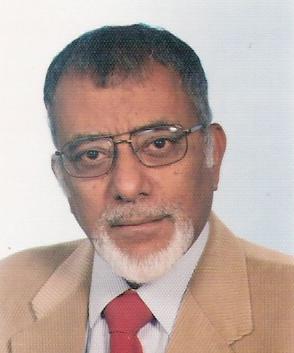
Prof. Charles Sarvan
From inclusive Ceylon to excluding Sri Lanka: Grandfather’s Letters. Letters by C. Suntharalingam (1895-1985), edited by C. Anjalendran, Sailfish Publishers, Colombo, 2016.
Time is unredeemable; what might have been is an abstraction ~ (Adapted from T S Eliot’s poem, ‘Burnt Norton’)
Chellappah Suntharalingam (1895-1985; known variously as “Sun”, “Sunth” and “Sunthar”) passed with distinction in Mathematics at Oxford University. He joined the Ceylon Civil Service but, energetic and restless; bored with signing gun licenses, he resigned. For a while, he was vice-principal of Ananda College (unthinkable for a Tamil in Sri Lanka today); later the first Professor of Mathematics, Ceylon University College. Entering politics and winning the Vavuniya seat, he was a proverbial “stormy petrel”; individualistic; fearlessly frank and outspoken. D S Senanayake, before he became independent Ceylon’s first Prime Minister, frequently visited Suntharalingam, and “Sunthar” personally knew many of Ceylon’s political leaders, both Sinhalese and Tamil: “I met Arunachalam in London in 1920 when he came as Leader of the Ceylon Reform” deputation.” I met Ramanathan in 1915 in London when he came to save the Sinhala people from the atrocities of British imperialism (p. 61). The book is not without humour: “educated and recruited in England”, young Suntharalingam on his return received proposals of marriage from some of the richest “Thamil” (see below) families of the day, but the prospective brides were fatter than their fat dowries (p. 19).
 The cart-drawn journey from Jaffna to Colombo took five to six days. Suntheralingam was about fourteen when he travelled from Chunnakam to Urumpirai by train for the first time (p. 33). Though his mother was illiterate, “Sunthar” says she highly educated. A wise and strong widow, through careful planning and frugality, she educated five sons in then-faraway Colombo. As a child in Jaffna, “Sunthar” walked to school, sat on a floor smeared with mud and cow-dung, and wrote out the Thamil alphabet on sand. (He uses the phonetically more accurate “Thamil” rather than the anglicised “Tamil”.) Even as a Professor of Mathematics, he would mentally calculate in Thamil while lecturing in English (p. 30). He recalls that some children brought nothing to eat at school, and physical hunger affected their mental performance (pp. 46-7). He quotes with approval the Latin saying, ”Mens sana in corpore sano”. Before beginning homework by lamplight, he would wash, say his prayers and wear holy ash: the attitude to studies was almost reverential. Supper was served only after homework was completed. (No doubt, their cooking was done over a wood fire. I remember the short hollow tube, black with use and soot, through which my mother blew to encourage the fire, the flames casting a red glow on her.) As a child in Jaffna in the 1940s, I recall that if a pupil accidentally dropped a book, any book, she or he would pick it up and touch the forehead with it as a sign of contrition. If they were caned in school, children usually didn’t tell their parents for the reaction most likely would have been: “What! You gave the teacher cause to beat you?”
The way of life of a people, their values and attitudes (all summed up in the word ‘culture’) cannot be separated from the physical environment. The high value placed on education is not surprising. Jaffna didn’t have lush plantations nor industry and factories; the soil was arid, demanding much patient labour. It’s therefore not surprising that many “Thamils” moved out in search of employment (some beyond the shores to Malaya). Their self-discipline and industry led to a success that was felt to be disproportionate to their number, in turn exciting deep resentment and anger. (To blame British favouritism for alleged disproportionate Tamil success took away credit from one side and self-reproach from the other.) Comparisons have been made with attitudes to the Jews in the various countries in which they existed prior to the establishment of the state of Israel in May 1948.
