

Part V: Is Thomas More’s Socialist Society Possible Today? And In What Form?

By Laksiri Fernando –January 15, 2017

Dr. Laksiri Fernando
With the publication of Chapter 3 of ‘Thomas More’s Socialist Utopia and Ceylon (Sri Lanka),’ the key question we are raising is whether his outline of a socialist society is possible today? My answer is yes; if not immediately, eventually. It does not need to be exactly in the way Thomas More outlined 500 years ago, but in its essence and in main principles. A major problem that we are confronting today is many of those who are called ‘Socialists’ have given up that struggle for various reasons.
The Left in Sri Lanka or elsewhere should not give up the socialist struggle for political expediency, or for the sake of modernization or fancy ideas of technological/managerial transformation. The struggle for democracy is important, but even that is not a reason to give up socialism. On the other hand, democracy is the surest path to socialism unlike the misguided attempts of building socialism without democracy by the so-called communist movements.
Here we are celebrating the five hundred years of Thomas More’s ‘Utopia’ (December 1516) by publishing the chapters of ‘Thomas More’s Socialist Utopia and Ceylon (Sri Lanka)’ by Laksiri Fernando (CreateSpace, 2014) every Sunday until the book ends, courtesy of Colombo Telegraph and Sri Lanka Guardian. This will allow anyone who wishes to read it, sooner or later, free access to the book. The publication link to the original for those who wish to obtain a printed copy is https://www.createspace.com/4688110
What is published today is Chapter 3 of the book titled ‘Utopian Political Economy.’ Along with other chapters, it is an outline of a socialist society. We can see how far we can get socialist inspirations from Thomas More for today’s world. This is Part V of the series as we have already published chapters 1 & 2 in addition to the Preface and the Introduction.
UTOPIAN POLITICAL ECONOMY
“Society does not consist of individuals, but expresses the sum of interactions, the relations within which these individuals stand.” – Karl Marx[1]
THE POLITICAL ECONOMY of Thomas More’s Utopia is a system of agrarian socialism combined with good governance at least in the economic sphere. As we have already discussed, based on a ‘dream island,’ very much similar to Ceylon in its geographical and physical makeup, More was describing a well-planned harmonious social system where men and women, and all sections of society, work and live in equality and happiness with few laws and congenial governance.[2]
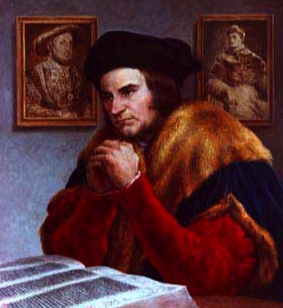
Thomas More
However, More obviously was not in a position to completely transcend the social practices or institutions of his time or the country that he came to know about. He talked about a ‘Prince’ as the head of the political system and ‘slavery’ took a milder form as a method of criminal punishment. Nevertheless, many of his propositions were remarkably futuristic, the practice or advocacy of them is common today although there can be doubts whether the overall ‘socialism’ that he talked about ‘without any property’ could be at all put into practice. More himself was not sure, and perhaps that was the reason why he titled the system as Utopia. According to some, it meant ‘good, but no place’ in Greek.
More advocated a society of equality without social classes, exploitation or poverty. That is something possible to achieve within a reasonable social range, without vast disparities but rewarding those who do or contribute better. It was a society of plenty. His political system was partly ‘liberal’ with few laws but an orderly government. The highest officers worked with the people. He advocated a ‘six hour working day’ and perhaps one of the first to stand for gender equity at least in some form. Some of his other innovative ideas were related to ‘euthanasia,’ ‘rainwater harvesting,’ and ‘urban-rural harmony.’ He even talked about incubation of farm chicken which was not known or practiced at that time.
With an extensive welfare system, he gave priority to health and education. Intellectual pursuits were highly acclaimed. His system was almost a ‘knowledge economy.’ Although he gave priority to ‘freedom of choice’ what he terribly missed was ‘individual privacy.’ Anyone could walk into anyone’s home. It was ‘transparency’ taken into a far extreme and ‘transparency’ into personal life. As More said, “All men live in full view.”
