

Sri Lanka’s LGBTIQ Equality Stalemate & Victorian Hangovers: Reflections On A Decolonizing Approach To Sexual And Gender Justice

By Chamindra Weerawardhana –January 19, 2017
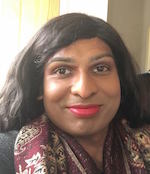
Dr. Chamindra Weerawardhana
The week of the 16th of January 2017 carried bad news for Sri Lanka’s LGBTIQ community. At the weekly meeting of the Cabinet of Ministers, a number of ministers had vehemently opposed the abrogation of Articles 365 and 365A of the Penal Code. This also implies vehement opposition to the inclusion of a constitutional clause on equality to all Sri Lankan citizens, irrespective of their gender identity and/or sexual orientation. In other words, this cabinet decision, reached by a cabinet of ministers that describes itself as advocates of ‘yahapalanaya’ (good governance) does not recognize the fundamental rights of Sri Lankan citizens who are not heterosexual in terms of their sexual orientation. Although regulations have been slightly altered with regards to the tedious process of ‘correcting’ the civil service documentation of Transgender citizens, this cabinet decision also amounts to a rejection of Transgender (and indeed other gender-plural) Sri Lankan citizens, as it clearly hints at a reluctance at the highest levels of government to ensure the fundamental rights of citizens irrespective of their sexual orientation and/or gender identity. In other words, the government of the Democratic Socialist Republic of Sri Lanka and its President, whose election was described as the dawn of an era of good governance, does not recognize non-heterosexual and non-cis-hetero-normative Sri Lankans. Despite the tremendous contributions they make to society home and abroad, the highest levels of government have concluded that LGBTIQ people, due to their sexual orientation and gender identity, as a second, if not third class, pariah category. This writer, for instance, a Sri Lankan citizen and a multilingual Trans woman with a Franco-British education plus an International Politics PhD, is, to go by the cabinet decision, of zero relevance or interest to the government of the Democratic Socialist Republic of Sri Lanka. 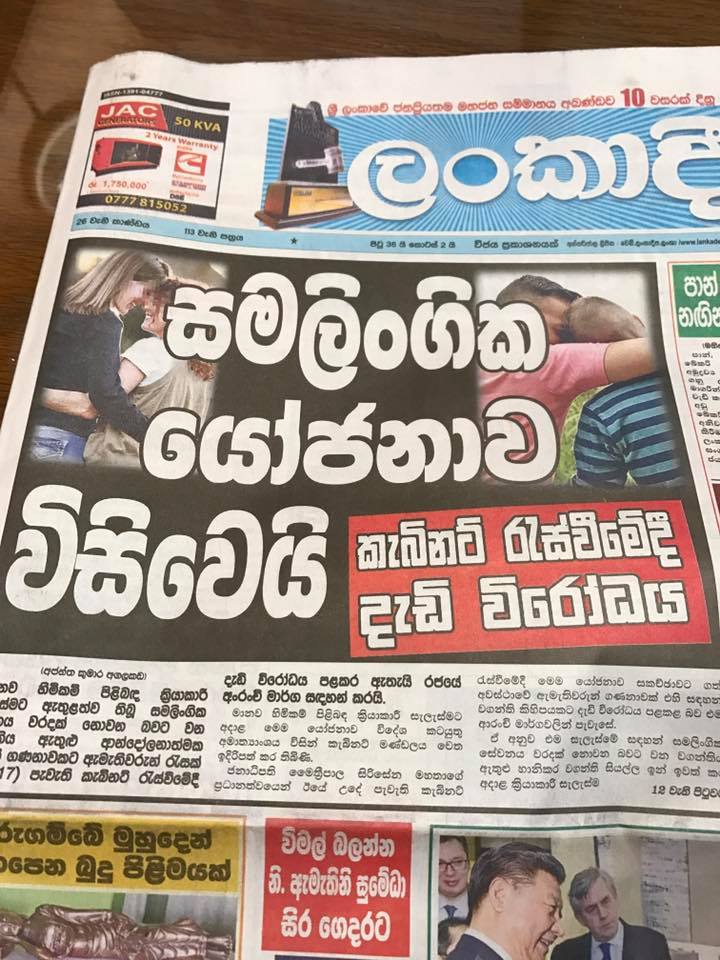
The media portrayals of the cabinet decision demonstrate a major problem, a substantive lack of representation, and ‘local’ role models and prominent LGBTIQ personalities, if not local LGBTIQ leaders, who are strong sexual and gender justice activists and advocates, who can command a high level of regard, influence and appreciation in local society. This enables media houses to take a ‘tabloid’ path of shamelessness. When one newspaper carries a headline on the Cabinet’s refusal to decriminalise non-heterosexual sexualities and relationships, another newspaper highlights that the decriminalisation effort was a ‘surreptitious attempt’ that was part of the Human Rights Action Plan, which was primarily spearheaded by the Ministry of External Affairs. Another state-owned newspaper, in a remarkable move to avoid mentioning LGBTIQ rights and to ‘counter’ the emphasis on ‘non-heterosexual sexual activity’ in other media outlets, quotes officials at the EU Mission in Colombo, in order to refute the claim that the EU laid down 58 preconditions for the GSP+ trade benefit to be re-granted to Sri Lanka.
