

Bigger Is Not Always Better

By Ranil Senanayake –January 20, 2017
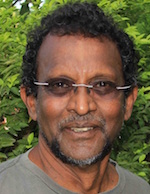
Dr Ranil Senanayake
With mega cities and mega economic zones, the current crop of politicians seem to follow the ‘bigger is better’ philosophy of consumerist economics. They are the ‘Wannabe’s’ of Sri Lanka, those who want Sri Lanka to be like Singapore or Dubai or New York. They wanna-be anything but Sri Lankan. They would change our culture, our values, and our environment and compromise our nationhood, just to become more like some other country that has attracted their personal attention.
We are told that they have to create megapolises and mega economic zones in order to get the money to pay the for loans taken for our ‘development’, at the same time taking out more loans to continue their ‘development’ agenda. The medicine that they propose might be much worse than the illness. With some politicians promoting ‘industrialization’ without any thought of what type of industries they propose, we are back to an era of inviting ‘robber barons’ into our land.
In a horribly polluted planet, countries with responsibility towards their citizenry are pushing out their polluting industries. It is not difficult to guess where the displaced polluting industries will go to. They will move to countries with loose environmental standards or with corrupt rulers, They will get those rulers parrot the formula of industrialization and come in as the ‘investors’ who will save us by providing jobs.
The ultimate act of betrayal of a nation is for its leaders to sell the birthright of its citizenry. Access to clean land, access to clean air, clean water and safe food is our birthright. So far this ‘development’ process has almost completely restricted public access to the shore along our southern coast, it has reduced the quality of air in our urban centers to the point of being a health hazard and has rendered 90% of the streams with drinkable water to be unusable today. For how long more can we afford to continue the madness?
It is not that the current rulers are unaware of the dangers. It was in February 1978 that the Daily News published this article:
The Meaning of Development
‘Development and progress, are words that we are very familiar with, and rightly so. As a nation all our hopes and aspirations are centered around the promises attendant on this processes. However, recently there have been some questions on the values of “development” and as in every controversial issue the battle lines have been drawn. The combatants are, as is usual in these affairs, mostly from developed countries and the people of developing countries more often than not, are mere witnesses to these esoteric exchanges. I do not intent to imply that these arguments are not valid; rather I would like to draw attention to the fact that often both points of view have the references deeply rooted in ‘developed’ or western technological thought.
Development in the context of the correct usage of the world certainly seems wedded firmly to Western technological thought. Whether we use it to describe an economic order or a social order, the roots are the same. The word development carries other connotations in the context of present usage. It suggests that the country to be developed is some way inferior to the model to which it aspires to become. The point here is: inferior by whose standards? To an industrialist from a western country, a poor village in the third world does indeed need to be developed. A view, that will more often than not, be held by the rulers of the same country. At this junction a quote from Richard Gott (CDN 26.1.78) seems pertinent.
“With the formal ending of colonial rule in all three continents of the Third World, political independence was granted a tiny elite trained not to question the framework within which the world economy operated”
It is this elite that laid the foundation for education in those countries, thus the value system operating and transmitted was certainly not endemic by any means. With this perspective in mind, lets us attempt to look at ourselves.
We in Sri Lanka are continually talking about development. I believe that in the end this merely means an increase in industry and consumerism. It most certainly could not refer to a cultural or a philosophical development.
For a country in which a major part comprehends philosophical concepts that are addressable only by a minority of scholars in the West, must certainly, in comparative terms, be more developed. An argument could be made “Do we not need to be developed in our agriculture?” Does an agricultural system that does not rely on any form of energy subsidy other than biological energy need to be “developed”, so that, its productivity becomes reliant on external fossil energy?
