

Notes on peace from northern Sri Lanka

 Wed, 5 Oct 2016-10:00am , dna webdesk
Peace is a mixed bag—hope and despair, tedium and anticipation, fear and freedom. It seems almost to depend on silence. For some, it is denial; for others, survival.
This year, I spent International Day of Peace in Jaffna and Kilinochchi, Sri Lanka. We drove up and down A9, a road I have always associated with military operations during the war, although its history precedes the conflict. Between Elephant Pass and Kilinochchi, war memorials line the highway, underscoring this association. At the southern end, at the entrance stands a concrete sign bearing the words, “Kilinochchi, the heart of hope and peace.” At the northern end, the sign reads “Kilinochchi: The rising city with peace, hope and harmony.”
“Now, there is peace.” What does peace mean?
It means that after decades of shunting between two warring parties, trying not to be either recruited or shot, people can breathe and think about other kinds of survival. Peace means the prospect of loans and of phones, of travel and of opportunity. Peace is the proliferation of banks and small hotels—the appearance of a small town on global travel websites. Peace is school-children riding bicycles on the road alongside military and tourist vehicles.
Peace is silky-smooth highways that link one rural road to another. It is the military-looking men— some police, some army, some navy—that desolately punctuate the highways, holding their rifles. It is the mammoth war memorials everywhere—as if those who suffered, and everyone suffered, can ever forget. Peace is the bus-loads of tourists who come to see the sites of war and enemy bunkers and it is also the military-run holiday beach resorts. Peace is driving down a long road with no check-points, but thinking as one sees a place-name, “Is this where...?”
Peace is a strange thing, but we are told, it is here.
The traces of war
The shiny and new, the run-down and the utterly ruined sit cheek by jowl as we drive these roads. There are abandoned houses everywhere. Some sit alone in the middle of fields. Some are on arterial roads we pass all the time. I cannot tell what they are and who they belong to. Some must have been mansions that belonged to wealthy families. I try to imagine the car that stood in their driveway or the cows tethered to a shed in the backyard. Some must have been family homes that saw a dozen grandchildren run up and down and sit down to eat together. Some stand forgotten, some have contesting claims.
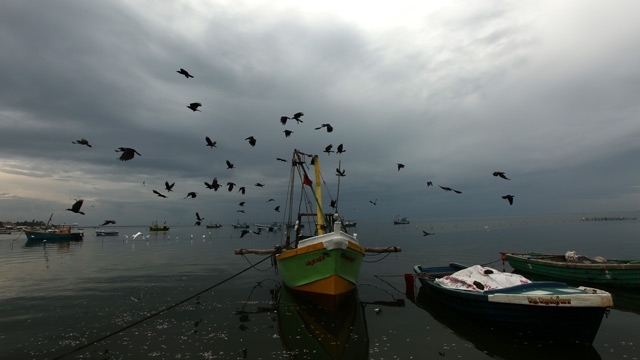
Run-down shacks stand by the sea. Small temples, actually brick or cement boxes, with just a picture of some deity, remain here and there. The coast is full of shrines. God, in every form, is mute witness to everything that has happened, as are the sea, the sky and the trees that survived. The clouds, like people, have to move on.
Infrastructure development has clearly been a post-war priority because the main roads are surely the envy of this neighbourhood, but it is patchy enough that the new simply stands awkwardly next to the old and run-down. Banks, ATMs, supermarkets and boutiques have emerged but few large, local enterprises able to hire the thousands of young people in this area. Everything is here but still it’s a little bit like a world left behind.
War lingers in the silences. Every topic, every reason, every explanation is fair game. But in this time of peace, let us not mention war at all.
