

The Gandhiyam
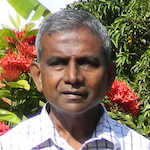
Dr. Rajan Hoole
1979 – 83: The Mounting Repression – Part V
 The feeling among Tamils that they needed a separate state reached a peak during the years following the 1977 violence.
Securing the border areas of the North and East from state sponsored colonisation had been a burning Tamil concern from the 1950s. The nationalisation of British owned estates in the early 1970s by the SLFP-led government led to disruption. This in turn resulted in starvation. There was also eviction of estate families by organised mob attacks. Many of the victims, Tamils of recent Indian origin, drifted to the North-East in search of a new livelihood. The drift became a flood following the 1977 communal violence.
From the time these displacements began, several politically backed Tamil groups sprang up to help these people to settle in the North-East, often along border areas and to provide them with means to a livelihood. There was a race as it were between these Tamil groups on the one hand and state-backed Sinhalese groups on the other, to match Tamil settlement with Sinhalese settlement. Settlements of displaced Hill Country Tamils came up in the interior of Batticaloa District in 1975 when Bradman Weerakoon was GA, Batticaloa, and Nihal Jayawickrema was Secretary, Ministry of Justice, in the SLFP-led government. The Police were sent in. Settlers were beaten and jailed. Telegrams were sent to Indira Gandhi, Prime Minister of India, on their behalf. Thondaman and Devanayagam (both later ministers in the 1977 government) too were helping the settlers. Shanmuganathan who was then District Judge, Batticaloa, ruled the police action unlawful. The settlers dispersed by police action came back and prospered in areas such as Punanai and other interior areas until the violence of the 80s, when they had to flee once more.
Dr. Rajasundaram who was a medical practitioner, was involved in settlement work from early in the 70s. Following the violence of 1977 he and his wife, Dr. Shanthy nee’ Karalasingham who graduated from University of Ceylon, Peradeniya, in 1967, returned from England and started the Gandhiyam in Vavuniya. The object of Gandhiyam was to rehabilitate victims of the 1977 violence in the North-East. Its resettlement activities ranged through Trincomalee, Amparai, and Batticaloa districts as well. From the beginning, these activities had the support of all levels of Tamil society ranging through the universities, government services and professional classes.
Dr. Rajasundaram who was a medical practitioner, was involved in settlement work from early in the 70s. Following the violence of 1977 he and his wife, Dr. Shanthy nee’ Karalasingham who graduated from University of Ceylon, Peradeniya, in 1967, returned from England and started the Gandhiyam in Vavuniya. The object of Gandhiyam was to rehabilitate victims of the 1977 violence in the North-East. Its resettlement activities ranged through Trincomalee, Amparai, and Batticaloa districts as well. From the beginning, these activities had the support of all levels of Tamil society ranging through the universities, government services and professional classes.

The organisation’s president, S.A. David, was arrested at the YMCA
Posterity may find the passions of the times centred around land and borders truly remarkable. Without them, Tamil separatism and militancy would have lacked their cutting edge. It seemed a game of wits of the Tamil intelligentsia pitted against the wits of the Sinhalese intelligentsia. On the one side it was a passion for the preservation of what goes with a sense of community, and the desire for a homeland, secure from violence. On the other it was a passion to preserve what was deemed a Sinhalese unitary state from ancient times and to prevent what was perceived as the traditional Tamil menace from acquiring space for further expansion. This ideological position, as we shall see, was not unmixed with pedestrian economic and political motives for the ruling class.
What the Tamil side lacked in state power, man power and gun power, it tried to compensate with an articulate world-wide diaspora with no love for the Sri Lankan State, who could now and then pull off a propaganda coup highly irritating to the latter. The full potential of the Tamil diaspora did not come to be felt until after July ’83, and too often then, not to the best advantage of Tamils here.
The majority of those in and around groups like the Gandhiyam harboured separatist sentiments. Sometimes rural TULF supporters who worked with the Gandhiyam found Dr. Rajasundaram’s criticism of Amirthalingam too strong to stomach.
Depending on how one looked at it, Gandhiyam could have been viewed as causing a problem. But that problem also had an easy solution. For one the Government would have had to demonstrate in the clearest terms that it had no ethnic agenda, and no intention of pursuing demographic changes through colonisation of the border areas so as to bring insecurity to the minorities. The other was to address the many genuine grievances of Tamils in the Hill Country. This meant a political settlement in the broader sense. The Government showed few signs of decisive movement in this direction. That led to problems of a more serious nature.
