

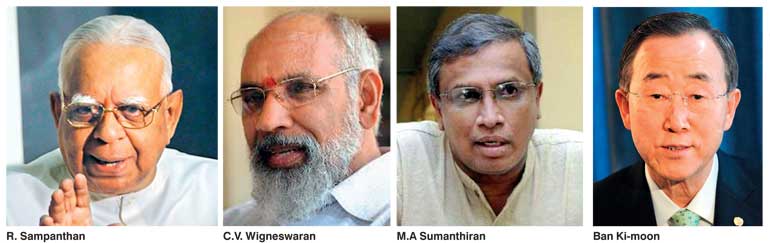
As a quiet crisis within the TNA deepens, the need for a constitutional power sharing arrangements to address the root causes of ethnic conflict, meet the aspirations of the people and empower Tamil moderates grows ever more urgent
 Thursday, 8 September 2016
 On 23 May 2009, four days after Sri Lanka’s civil war had come to its brutal and bloody end, Secretary General of the United Nations, Ban Ki Moon arrived in the island.
On a quick trip to the embattled Northern Province the UN Chief flew over the final theatre of battle in Mullaitivu, an area still smouldering from deadly fighting, where a panel of UN experts would later estimate that tens of thousands of people had been killed. From his helicopter, Ban gazed down upon a scorched landscape that was heavily cratered and scattered with debris. To meet with President Mahinda Rajapaksa whose Government had just defeated the LTTE and claimed victory in a 26 year armed conflict, the Secretary General had to make a flying visit to Kandy. With all the travel packed in to the UN Chief’s visit in 2009, he had fit in one last important meeting at the Bandaranaike International Airport shortly before his departure. Rajavarothiam Sampanthan, the leader of the largest Tamil party represented in Parliament was to meet the Secretary General at BIA. Sampanthan arrived at Katunayake at the appointed time, but was barred from proceeding towards the meeting area by security personnel. Security officials informed the TNA Leader that he could not proceed because Gotabhaya Rajapaksa, defence secretary at the time was of the view that “the airport was not a meeting place”. Sampanthan reached out to UN officials stationed in Sri Lanka, including Resident Coordinator Neil Buhne to gain access, but the effort proved futile and the veteran Tamil politician was compelled to forgo the meeting.
Seven years later, on his second visit to Sri Lanka, Ban Ki Moon landed in a very different country.
Seven years later, on his second visit to Sri Lanka, Ban Ki Moon landed in a very different country.
The Fractured North by Thavam Ratna on Scribd
