

Lions, Gods & Heroes: Military In The Popular Culture Of Postwar Sri Lanka

By Jerome Cooray –September 9, 2016

Jerome Cooray
Sri Lanka’s military plays an important role in the popular culture of the island nation: It is a part of the history, the popular memory and the daily life of 20 million Sri Lankans who suffered from a three-decade long civil war since the anti – Tamil pogrom of ‘Black July’ 1983; a war fought between the Sri Lankan Government and the separatist terrorist group LTTE (Liberation Tigers of Tamil Eelam) who demanded for an independent state of Tamil Eelam to be carved out of the Northern and Eastern Provinces of Sri Lanka. This brutal civil war which claimed up to 100,000 lives and displaced tens of thousands civilians came to an end on 18th May 2009 with the defeat of the LTTE at the hands of the Sri Lankan Armed Forces (SLAF). One can argue that with the end of the war, there have emerged two distinct post war portrayals of the military in the popular culture of Sri Lanka; a ‘northern portrayal’ among the Tamils of the northern regions of the island and a ‘southern portrayal’ among the Sinhala – Buddhist majority who dwell in the central, western and southern regions of the island. This short article attempts to summarize the following distinct features of the latter portrayal, the ‘southern’; they are the emphasis on the re-narration of Sinhala – Buddhist history and the Sinhala myth of origin that speaks of lions, gods and heroes, and the alteration of the daily terminology from ‘soldier’ to ‘war hero’.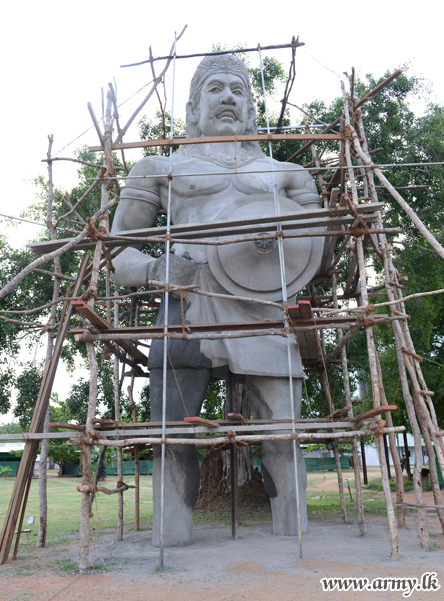
The last phase of the war saw intense recruitment propaganda by both sides. The Sri Lankan Government effectively utilized popular media to gain support of mainly southern and also the north-eastern Sri Lankans for its military operation by engineering a special focus on the ‘humanitarian’ portrayal of the military. ‘Api Wenuwen Api’(Together for All) was a campaign, which employed thetalents of many artists and writers, that helped to draw popular support during the final Eelam War. It imprinted a lasting popular memory in the Sri Lankan psyche in the post civil war context.
Re-narration of the Sinhala – Buddhist history
The victory of the Sri Lankan Armed Forces on 18th May 2009 is considered by many southern Sri Lankans (mainly Sinhala – Buddhists) as a re-making of the historic Battle of Vijithapura between the Sinhala – Buddhist King Dutu-Gamunu and the righteous yet Dravidian invader, King Elara around the 2nd Century B.C.E, which resulted in the victory of the Sinhalese. In fact the former President Mahinda Rajapakse gave currency to this ‘image’ when he paid homage before a statue of King Dutugamunu in 2009[i]; and in 2013, the Sri Lankan Army erected an archway in the ancient city of Anuradhapura which depicts the Vijithapura Battle. Although it has been officially expressed by the Government of Sri Lanka on numerous occasions that the war was fought not between the Sinhalese and the Tamils, but between the state and the terrorists, the erection of such monuments in a historic civilian /public space in the post war context brings into question the official narrative of the civil war. At the same time it makes one question the meaning of the war time portrayal of the military as a humanitarian force; has the military undertaken a role as the custodians of a Sinhala – Buddhist identity and its history, contrary to being the protectors of the sovereignty and all people of Sri Lanka?
