

WikiLeaks: Sri Lanka-China Relations After Mao’s Death
 April 10, 2016
“The Sri Lankan government (GSL) declared an eight-day period of mourning to coincide with observances in China. September 18, the day of Mao’s last rites in Peking, was also declared a day of national mourning and a public holiday.” the US Embassy Colombo informed Washington.
“We would judge that a gradual trend in Sri lanka’s relation with China will develop which will lead to a less close relationship. This should have the effect of undermining, to some extent, the influence of the “Maoists” in the present government, with a corresponding reinforcement of moderate elements. To the extend this encourages more pragmatic economic policies and less attention to ideology, of which there is currently a surfeit, such a trend in the relationship between the two countries will be compatible with US interests. Unless there is a marked improvement in Sino-Soviet relations, however, we expect the Chinese and their local adherents will continue efforts to counter soviet influence in Sri Lanka and the area. We feel this will be useful in maintaining a balance of the external forces operating here which is also in our interest.” the Embassy said in a confidential cable.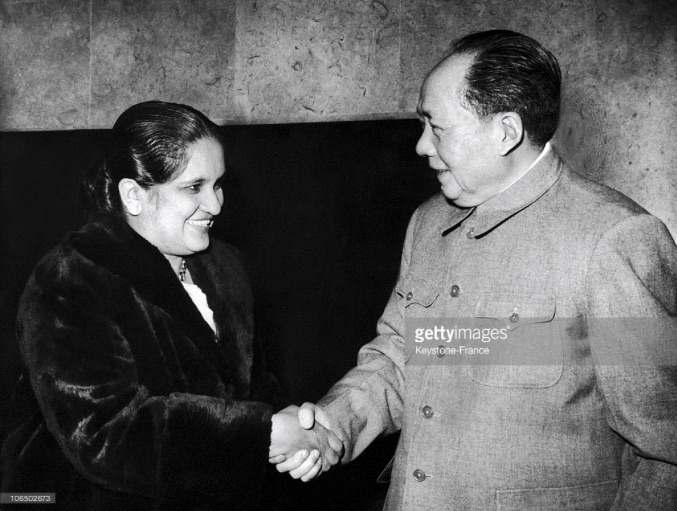
The Colombo Telegraph found the related leaked US diplomatic cable from the WikiLeaks database dated 1976 September 24. The cable is classified as “Confidential”.
We publish below the cable in full;
Reflecting the close and friendly relations between Sri Lanka and the People’s Republic of China (PRC), the Sri Lankan government (GSL) and media gave massive attention to Mao’s death and the following obsequies. Prime minister Bandaranaike was the main speaker at a September 20 condolence meeting. She stressed the closeness of relations between the two countries and between herself and Chou En-lai and Mao Tse-tung. Emphasis on the past points up the fact that the bases of China-Sri Lanka relations have been shifting. It seems probable that the new Chinese leadership may be less forthcoming in its assistance to Sri Lanka, and this, combined with other factors, should create a trend toward a less close relationship between these two countries. Such a trend may enhance the influence of moderates in the government, weaken the ideologues, and reinforce the trend toward more pragmatic economic policies. If so, this trend will be compatible with U.S. interests.
