

Wanted: Consistent and predictable policies
 Monday, 11 April 2016

Read More
Monday, 11 April 2016
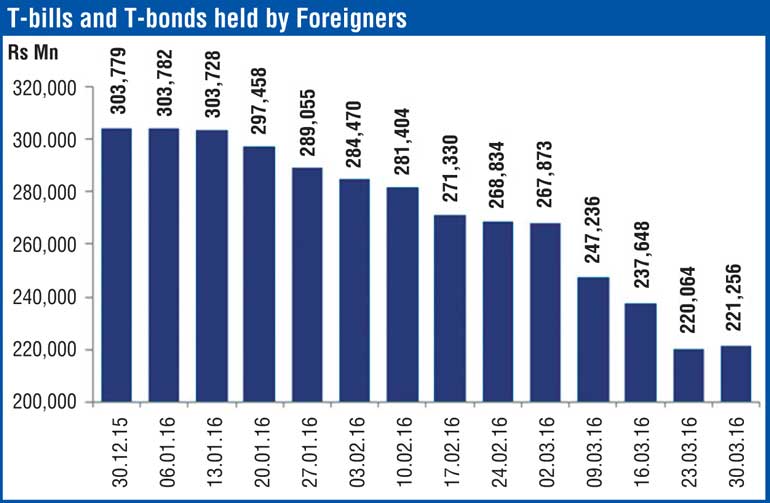
The first quarter of 2016 is already gone. In the balance part of the year the country will have to focus on getting its priorities right. What are we going to aim for? The policy planners and corporate captains will have to jointly craft a strategy that will help to navigate the country’s economy through a sea of internal and global challenges. In the wake of the Fed rate hike in the US and the gradual hikes of the same anticipated for the future, foreign borrowing costs of developing countries, including Sri Lanka, will increase. This will force the Government of Sri Lanka to focus more on domestic sources to fulfill its borrowing requirements. This, in turn, will push up domestic interest rates, further increasing the Government’s debt servicing costs. Therefore, the government will have to cut down its unnecessary/wasteful expenditure and manage its expenditure prudently.
The Government will have to be careful when launching ambitious projects such as the Western Province Megapolis Development project (estimated to cost over $40b). The funding for such projects would be crucial. If such mega projects are going to be funded through government debt (either foreign or domestic debt), that will only aggravate the already precarious debt burden of the Government.
In the period ahead, the government will have to carefully tackle the pressure on both the interest rates and the exchange rate. Fiscal consolidation and attracting foreign direct investments (FDI) will be crucial in overcoming these challenges.
The next section deals with the need for fiscal consolidation.
Fiscal consolidation is crucial
The budget deficit needs to be kept in check. Otherwise, Sri Lanka will not be able to reduce its high debt/GDP ratio which is estimated to have recorded 74.9% in 2015. The budget deficit which was as high as 9.9% in 2009 was gradually brought down to 5.9% in 2013, with a marginal increase to 6% in 2014. The figure for 2015 is not yet known, but it is likely to be around 7.0%. Therefore, the government will have to urgently focus on fiscal consolidation with a view to reducing the country’s debt/GDP ratio. Rating agencies place considerable emphasis on debt/GDP and external debt/GDP ratios of a country in assigning a sovereign credit rating to it.
Read More
