

Stop the blame game; think of the future
 2016-03-11
 Some reflections on Latheef Farooq’s thoughts My mind started debating with itself after reading the thought provoking piece by our senior and most respected colleague Latheef Farooq that referred in detail to my previous column in the Daily Mirror on the harmony between Sinhala Buddhists and Muslims.
.jpg) In fact two particular recent incidents, specifically from the Sinhala Buddhist side, prompted me to add these thoughts to the deliberation with Mr. Latheef.
In fact two particular recent incidents, specifically from the Sinhala Buddhist side, prompted me to add these thoughts to the deliberation with Mr. Latheef.
Before getting into those two incidents let me comment on some particular points of Mr. Latheef. He has correctly detailed the historical background to the issue, but should we repeat this over and over again? We are very well aware of the fact that the racist political leaders are responsible for the ethno-religious tension in this country that galvanised into a fully-fledged war between two ethnic communities (Though someone could argue otherwise claiming that it was not an ethnic war, my explanation would be totally different).
I honestly think that we should stop this blame game and strategically think of the future searching for ways and means to rectify the situation since continuation of these accusations would not bring any result, rather deepen the mistrust through an unpleasant debate. Of course, we should not forget it as the lessons from the past should be the foundation for future.

I mostly like his critical analysis on the role of the religious leaders. The two incidents that I was referring to were, in fact, the role of these religious representatives who had immense power in shaping the minds of their blind followers. These two incidents depict two different aspects of the Sinhala Buddhist mindset on ethnic reconciliation.
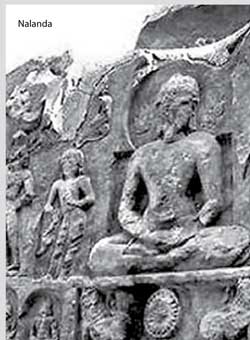
One incident happened in the historic university of Nalanda in the State of Bihar in India early this week when a group of Sri Lankan Buddhists visited the site.
A Sri Lankan Buddhist monk, who was residing in that area was explaining the historical value of the former educational cum monastery complex, but slowly crossed the limit and started stereotype rhetoric against the Muslims referring to the devastating attack by the Turkish leader Bakhtiyar Khilji in 1193 that caused a major setback to Buddhism in India.
While alarming the Sinhala Buddhist listeners about alleged threats from the ‘over-populated’ Muslims, the monk was referring to a series of doctored statistics, which were far beyond reality. The Sinhalese will soon become a minority in Sri Lanka, he warned them with some hypothetical numbers. The usual rhetoric against Muslim businesses was repeated requesting them not to step into those shops.
See more>>>
2016-03-11Some reflections on Latheef Farooq’s thoughts My mind started debating with itself after reading the thought provoking piece by our senior and most respected colleague Latheef Farooq that referred in detail to my previous column in the Daily Mirror on the harmony between Sinhala Buddhists and Muslims. In fact two particular recent incidents, specifically from the Sinhala Buddhist side, prompted me to add these thoughts to the deliberation with Mr. Latheef.Before getting into those two incidents let me comment on some particular points of Mr. Latheef. He has correctly detailed the historical background to the issue, but should we repeat this over and over again? We are very well aware of the fact that the racist political leaders are responsible for the ethno-religious tension in this country that galvanised into a fully-fledged war between two ethnic communities (Though someone could argue otherwise claiming that it was not an ethnic war, my explanation would be totally different).
I honestly think that we should stop this blame game and strategically think of the future searching for ways and means to rectify the situation since continuation of these accusations would not bring any result, rather deepen the mistrust through an unpleasant debate. Of course, we should not forget it as the lessons from the past should be the foundation for future.
I mostly like his critical analysis on the role of the religious leaders. The two incidents that I was referring to were, in fact, the role of these religious representatives who had immense power in shaping the minds of their blind followers. These two incidents depict two different aspects of the Sinhala Buddhist mindset on ethnic reconciliation.
One incident happened in the historic university of Nalanda in the State of Bihar in India early this week when a group of Sri Lankan Buddhists visited the site.
A Sri Lankan Buddhist monk, who was residing in that area was explaining the historical value of the former educational cum monastery complex, but slowly crossed the limit and started stereotype rhetoric against the Muslims referring to the devastating attack by the Turkish leader Bakhtiyar Khilji in 1193 that caused a major setback to Buddhism in India.
While alarming the Sinhala Buddhist listeners about alleged threats from the ‘over-populated’ Muslims, the monk was referring to a series of doctored statistics, which were far beyond reality. The Sinhalese will soon become a minority in Sri Lanka, he warned them with some hypothetical numbers. The usual rhetoric against Muslim businesses was repeated requesting them not to step into those shops.
See more>>>
