

International Participation To Deal With The Past
By Jehan Perera –March 7, 2016
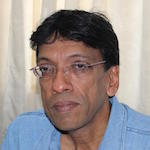
Jehan Perera

The visit by Foreign Minister Mangala Samaraweera to the United States last month, and his assurance that the Sri Lankan government is contemplating international participation in the post-war acccountability process is an indicator of the pressure that the government is being subjected to on this issue. Neither the improvement in relations between Sri Lanka and the Western-led international community, nor the improvement in the human rights situation on the ground, is getting the international community to relent on the issue of international participation. However, there appears to be a willingness to give the government more time. The UN Human Rights Council resolution, which was co-sponsored by the Sri Lankan government last October, had highlighted “the importance of participation in a Sri Lankan judicial mechanism, including the Special Counsel’s office, of Commonwealth and other foreign judges, defense lawyers and authorised prosecutors and investigators.”
 On the one hand, there are technical and credibility-centred reasons for having international participation in an accountability process that concerns the war. The first is that crimes associated with war are not part of Sri Lanka’s present legal framework. War crimes are a well developed part of international law but not of Sri Lankan law. Therefore the Sri Lankan legal community has little or no experience of dealing with the laws relevant to war, such as principle of proportionality and command responsibility in military action. This gives rise to a need for international legal expertise to be brought in, at least for an initial period of time. On the other hand, the credibility centred reason for international participation stems from the lack of confidence of the Tamil polity in the Sri Lankan judiciary at the present time.
The main problem with a national accountability mechanism, from the Tamil perspective, is the apprehension that its findings and conclusions would be subservient to the interests of the Sri Lankan state. Sri Lanka has yet to find the solution where the ethnic minorities have confidence that the Sri Lankan state will be fair and impartial to them on controversial matters. To its credit the new government is taking the country in this direction, as borne out by its willingness to have the national anthem sung in Tamil at the Independence Day celebration. But this is still only a token of goodwill. There is a need for more substantial actions to take place. Although the Chief Justice of the Supreme Court is Tamil the other 10 judges are Sinhala. There is no Muslim Supreme Court judge at this time. It is in these circumstances that there is disquiet amongst the Tamil polity about placing its faith on a Sinhala-dominated court and legal system on a matter as controversial as war crimes, on which there is a clear divide between the ethnic communities.
