

Climate Change Impacts, Agriculture & A Toxin Free Sri Lanka

By Rumal Siriwardene & Vositha Wijenayake –March 12, 2016
 On March 6, 2016, the Government of Sri Lanka launched the ‘Vasa Visa Nethi Ratak‘ – a 3 year programme aimed at curbing the use of agrochemicals, and focusing instead on locally produced organic fertilizers. The government intends to prevent produce such as rice, vegetables and fruits from being tainted by toxic agrochemicals.
It has been widely reported that Sri Lanka annually imports approximately Rs 80 billion worth ofagrochemicals. As Sri Lanka is a tropical country, this has alarming implications for its nitrogen dioxide emissions, since the humidity and heat cause higher amounts of Nitrogen Dioxide to be generated by the soil.
Harmful Impacts Nitrogen Dioxide
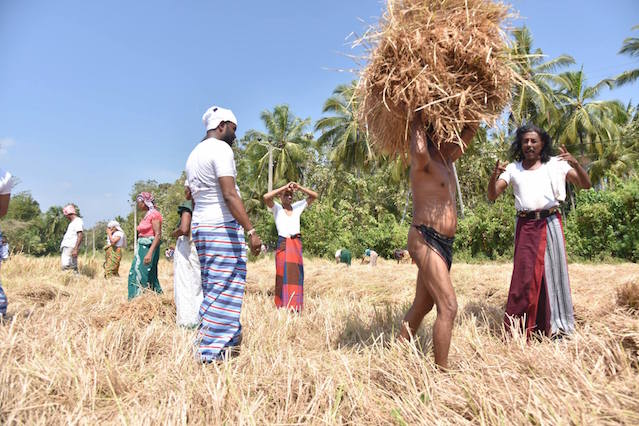 Carbon dioxide , produced primarily as a result of burning fossil fuels is the most dominant single source of greenhouse gas emission. Thus climate change policies and legislations across the world focus primarily on cutting down carbon emissions from industrial activities.
The detrimental effects of excess nitrogen dioxide in the atmosphere however, has not been given the same meticulous attention as carbon dioxide’s impact. Although the concentration of nitrous oxide in the atmosphere is considerably lower than that of carbon dioxide, the global warming potential of nitrous oxide is considered as being over 300 times greater. According to the International Panel on Climate Change (IPCC), for every 100 kg of nitrogen fertiliser applied to the soil, one kg ends up in the atmosphere as nitrous oxide (N2O). Also, nitrogen dioxide is the world’s most powerful ozone depleting substance. Due to these reasons, ignoring the impacts of N2O on climate change is not an option, and the global warming effect of nitrous oxide could be considered as extremely harmful as well as greater than the same amount of Carbon Dioxide released to the atmosphere.
