

After Sri Lanka, Will It Be Nepal’s Turn?

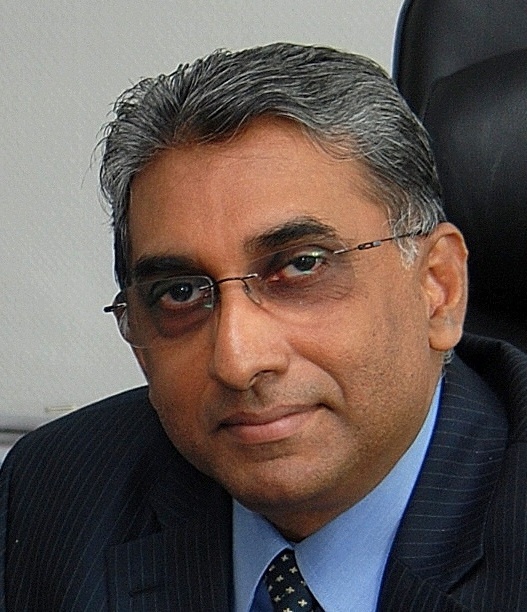
Rajeewa Jayaweera
After effecting ‘course correction’ in Sri Lanka in making its leaders replace the former regime’s ‘look East’ policy with a ‘look India’ policy, news from Nepal would suggest that India has now turned its attention to the tiny Himalayan Kingdom turned Republic in intervening on behalf of two minority communities having its origins in India, similar to its involvement in Sri Lanka on behalf the Tamil community.
Nepal is a landlocked country with an area of 147,181 sq. kms. It is located in the Himalayas with China in its northern border and India in its southern, eastern and western borders. Hinduism is practiced by around 81% of Nepalese, the highest percentage of any country, Buddhism by around 10% followed by those practicing Islam, Kiratism, Christianity and Animism.
Nepal, since the abolition of its monarchy in 2007 has not had a permanent Constitution for around nine years and has been grappling with the task of drafting one since it declared itself a Federal Republic on 28 December 2007. The task was finally achieved on 20 September 2015 when a new Constitution was signed into law after being passed by a record 85% in the 601 member Constituent Assembly. It was overwhelmingly supported by the three main political parties in Nepal i.e. Nepali Congress (NC) who in the past has not opposed India, Communist Party of Nepal –Unified Marxist Leninist (CPN-UMI) and Unified Communist Party of Nepal –Maoist (UCPN-M).
Two ethnic groups, the Madhesis and Tharus mostly living in the Terai District bordering the Indian states of Bihar and Uttara Pradesh are of Indian origin. They are demanding greater autonomy. They form around 30% of Nepal’s population. The Terai is the granary and a key industrial base of Nepal. The political parties of the Madhesi and Tharus carried out protest marches during the final phase of the Constitution being finalized and some of its representatives quit the Constituent Assembly a few weeks prior to 20 September.
Its passage rather than being enthusiastically greeted was simply ‘noted’ by India.
The new Constitution may not necessarily be the perfect answer to all of Nepal’s problems. Nevertheless it is an achievement for which the Nepalese need be commended and not berated. It has been achieved after a struggle lasting almost ten years and encompasses Federalism, is Republican and defines Nepal as a secular state. It also represents the political aspirations and will of the Nepalese people.Read More
