

Depoliticize The Constituting Council

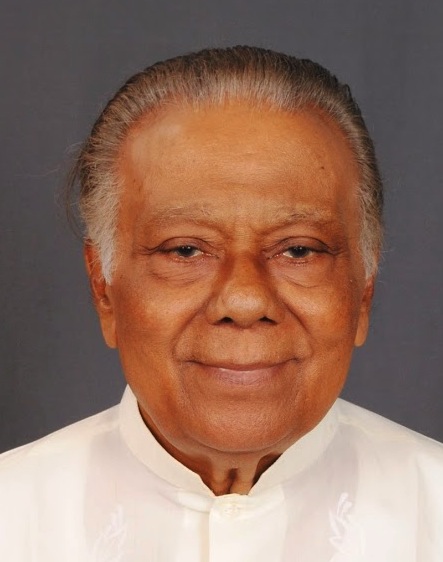
Somapala Gunadheera
Casually going through the comments under the featured news item, “Civil Society Disgraced by Choice of CC Nominees”, published in the Colombo Telegraph on September 23, 2015, I was surprised to see my name suggested by two readers for a post in the Constitutional Council. One of them was a stranger and the other was a class-mate who later entered the prestigious Foreign Service through the front door and ended up as our Ambassador in France. School ties certainly die hard! The purported nomination was not worth writing home about because it was supported by only two of the over twenty million people in this country. Although I was personally pleased by this act of appreciation, I would not have touched the post with a barge pole, even if it was offered to me by the entire population. This article is an attempt to explain why.
Let me preface my explanation with an observation on the title of the Council. Why is the body called a Constitutional Council?” A constitution is the basic law of the land. In that strict legal sense, what is ‘constitutional’ is what conforms to that law. The CC has nothing to do with the Constitution, except being a part of it. But other parts of the Constitution are not prefixed with that adjective. For instance, the Parliament in not called a “Constitutional Parliament”. Apparently the draughtsman has mistakenly used ‘constitute’ in the progressive tense implying the act of constitution of the respective commissions. For him the council that constitutes commissions is the “Constitutional Council. This confusion could have been avoided by calling it the “Constituting Council”. The Sinhala draughtsman has made the misnomer worse confounded by giving it a still more imposing title, “Ândukrama vyavasthâ sabhâva”, thus confining the adjective to the basic meaning of “Constitution”. If “Constituting Council” was used in the English version, he would have rendered it as “Sthâpana Sabhâva”.
Reverting to the basic issue, the main purpose behind the creation of the Sri Lankan CC is said to be to install an entity that can function independently, without political influence. But the manner in which the members of the CC are to be selected belies that aspiration. Three of its 10 members are leading politicians. One is a nominee of the top politician of the land, the President. Five others are nominated by the two politicians leading the two sides of the House. The tenth member has to be a nominee of the minor parties in Parliament. Note that seven members of the CC are sitting members of Parliament. Only the other three are private persons.
