

Goodbye Colombo Or Is It Hello?
Ranil Senanayake

The media informs us that the port city agreement has been extended for another six months. What does this mean? What will happen during this time period? Will it be to correct the shortcomings and produce a credible Impact Report or will it entail the restarting of physical work? If it is the former we can have some hope of justice, if it is latter it will be an act of great betrayal.
In a sense the so-called Port City project serves as a litmus test of the new government. There was an inquiry set up to report on the impact of the ‘Port City’ but that has gone silent, there has been no discussion or release of their ‘report’ to the public. When will the government begin to institute open transparent processes, especially when dealing with matters of national importance, are we still in that dark era of closed door deals or will we insist on a scientific, credible, environmental impact reports. The current pathetic excuse for an impact report needs no further comment.
While we await unilateral decisions of our so-called ‘democratic’ leaders. It is useful to reflect on the price that we Sri Lankans will have to pay for any ill informed decisions on their part. Let us consider one of the most basic of human needs, in fact, a need that should be enshrined as a fundamental human right, the right to breathable air. The medical studies on the city of Colombo indicate at about 60% of the citizens living there suffer some degree of respiratory problems currently. This statistic is a consequence of the quality of air that we have to breathe. Can we expect the same forces that allowed such a situation to arise, thinking about the impact the proposed ‘Port City’ will have on the population of Colombo?
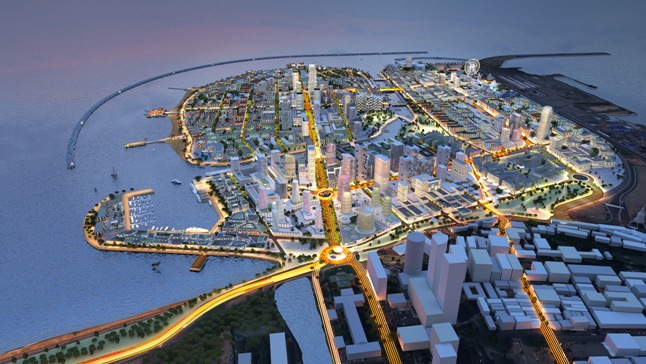 A multi story barrier to the clean ocean breeze that Colombo currently enjoys, will be shut off forever. In its place the Carbon monoxide, Ozone, dust and PM2.4 will increase. There is no reference at all in the port city project documents available to us that addresses, blocking the inflow of fresh air into Colombo. There is nothing in the documents that indicate the levels of Carbon monoxide, PM2.4, Oxides of Sulfur and Nitrogen that will be produced by the port city. There are no studies to indicate how these pollutants will flow and if they will affect the citizens of Colombo. Does the agreement extension for six months cover any of these aspects? Or will these concerns be ignored and the rate of respiratory diseases in Colombo go up to 90% or even higher?