

Land Bridge Over Palk Straits: Impact On Bio-Diversity & Ethnic Identity


Prof. Chandre Dharmawardana
In a previous comment I discussed economic issues and some questions about sovereignty that arise if the Indians revive a 2002 proposal for a land bridge over the Palk straits. Surprisingly, many Northern Nationalists think that the opposition to the land bridge is a matter of “Sinhala Chauvinism”. In fact the entity most threatened by the bridge is the “Illankai-Thamil” culture . The distinctive flora and fauna of the island, evolved since the last glaciation are equally threatened. The robustness of ecosystems and communities is strengthened by their bio-diversity and complexity. Hence all tendencies to mono-cultures and bio-uniformity should be resisted. The whole issue of whether to build a land bridge to India or not can be discussed in objective, non-emotional terms within such a point of view.
Bio-diversity
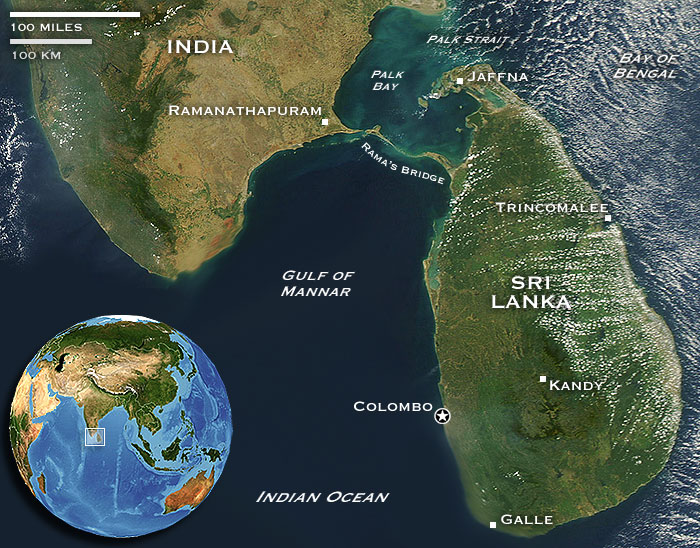 Legend holds that the Island was connected to India by “Rama’s bridge”. Geological evidence and temperature records validate such beliefs, and even delineate the periods when the sea was low enough to link the mainland to the Island. However, the sea level rose with the end of the cold spells. This provided a sanctuary for biological and cultural evolution distinct from those in the mainland. An impressive bio-diversity is seen in the Sri Lankan ecosystem. Any ethno-botanical list of Lankan plants (e.g, the author’s dh-web.org/ place.names/bot2sinhala.html) indicate Lankan species by name-ending like Ceylanica, or Zeylanica (though not always excluive to Lanka). The richness of the rain forests of Sri Lanka is well-known. We only wake up to it if foreign entrepreneurs attempt to exploit the native plants. Holiday bungalows in nature reserves are more important to the elites, while their henchmen engage in illicit logging and staking out forest reserves, with bio-diversity going up in smoke.Read More