

SC Decision On 19A Clears Way For Ultimate Abolition Sans Referendum: Dr. Jayampathy Wickramaratne

April 13, 2015
I have always been for the total abolition of the executive presidency. In the present circumstances, I cannot expect total abolition but I will continue to fight for that, says Dr. Jayampathy Wickramaratne.
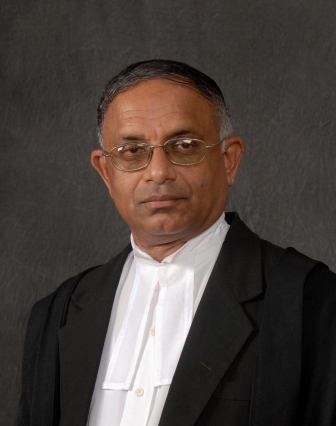
Dr. Jayampathy Wickramaratne PC
Dr. Jayampathy Wickramaratne, President’s Counsel and member of the Government’s constitution drafting team toldColombo Telegraph that the Court’s decision permits total abolition without a referendum.
“The only requirement is that the President must be the head of the executive and the ultimate ‘act or decision’ of his executive functions must be retained by him. I wish to emphasize the use of the word ‘or’ in the phrase ‘act or decision’. Thus, it is enough if the final act is that of the President even if the decision is not his. It is on this basis that the Court allowed the provision that requires the President to act on the advice of the PM in appointing Ministers. Also, the independent Commissions are appointed by the President on the recommendation of the Constitutional Council. No referendum is necessary although the President has to act on advice or recommendation. I am not against the President being the head of the executive. In fact, even under the 1972 Constitution, the President was the head of the executive but had to act on the advice of the PM.” he said.
Colombo Telegraph interviewed Dr. Jayampathy Wickramaratne, President’s Counsel and member of the Government’s constitution drafting team, on the 19th Amendment to the Constitution and the determination of the Supreme Court. The following are some excerpts;
What is your response to the Supreme Court’s determination on the 19th Amendment?
 The most important aspect of the determination is that the Court held that every inconsistency with Article 4 of the Constitution does not necessarily trigger off a referendum. Article 3 states that ‘sovereignty is in the people and is inalienable. Sovereignty includes the powers of government, fundamental rights and the franchise.” Article 4 goes into detail and if I may quote the part relevant to our discussion, Art. 4 (b) says ‘the executive power of the People including the defence of Sri Lanka, shall be exercised by the President of the Republic elected by the People.’ Article 83 gives a list of provisions and states that any amendment that is inconsistent with those provisions will require a referendum. Article 3 is in that list but not Article 4. In fact, Article 4 was in the list when the 1978 Constitution Bill was presented to the National State Assembly but the reference to Article 4 was deleted at the committee stage.
In the 13th Amendment case, Chief Justice Sharavananda held for the majority of judges that not every inconsistency with Article 4 would violate Article 3 and thereby require a referendum. He said that Article 3 would be violated only if there is a ‘prejudicial impact’ on the sovereignty of the People. However, in the 19th Amendment case of 2002, the Sarath Silva Court went on the basis that Article 4 must be read with Article 3 and that created the impression that every violation of Article 4 would attract a referendum.
