

Sovereignty And The Port City

By Ranil Senanayake -March 15, 2015
Ranil Senanayake
Throughout the world, the owning or holding of and that belongs to another sovereign nation, termed “territories held” have recently been largely returned. The Panama Canal was returned to Panama in January 2000, Hong Kong was returned to China by the United Kingdom in 1997, and Portugal returned Macau Island to China in 1999. The notable global exception has been the US base in Cuba. This history is interesting, as it will certainly have a bearing on the historical events that we are attempting to set in motion.
In 1903 after the turbulent period following the wars of independence, President Theodore Roosevelt signed an agreement with Cuba’s new government, leasing Guantanamo bay for 2,000 gold coins per year. History notes that the agreement was forced on the new Cuban government to give the U.S. navy permission to occupy the bay. As Cuba attained more independence and the Platt Amendment was annulled a new lease was negotiated between the Roosevelt administration and a Cuban government that included Fulgencio Batista as one of three signatories. When the Revolution triumphed in 1959, the new Cuban government requested that Guantánamo be returned to Cuba. Instead of returning it, the U.S. banned its soldiers stationed at the bay from entering Cuban territory. After this the Guantánamo base became a constant source of friction between the two nations. Ever since, Cuba’s call for the return of the area that the United States occupies is based on the principle of sovereignty,”
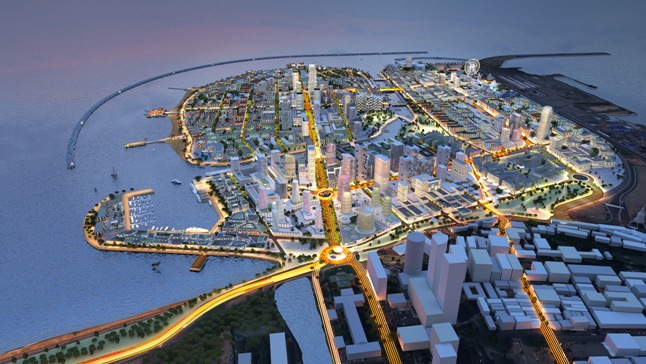 Sovereignty means supreme power or authority. When used as national sovereignty the authority of a state to govern itself or another state. Normally, it is granted to foreign diplomatic missions and local laws are not implemented on these lands; as seen in the case of Julian Assange, sheltering from the British police, in the Ecuadorian Embassy in London. The question that should concern us is: Will giving outright ownership of our land to non-diplomatic entities, dilute our authority to enforce the laws of the land within such lands? It is in this context that the agreements entered to by our Government and foreign Companies should be looked at. A deal as important as this should not have be left to a few bureaucrats, politicians and businessmen to decide, it should have been put before the people. Who will define the limits of our sovereignty over the new landfill? Those drooling over the possibility of making a quick buck should slow down and think.Read More