

People’s Movement For Democracy Should Continue Despite The Challenge Of Racism

By Athulasiri Kumara Samarakoon -March 10, 2015

Athulasiri Kumara Samarakoon
As Karl Marx insisted, ideas first emerge in the form of activity. Such activities may be theorized later on. When a new form of activism becomes the self-consciousness of a society, it could create social movements. We can consider this Marxist idea for examining how social movements emerge in capitalist societies. A broader social movement can arise through a larger concentration of people around a certain activity.
In Sri Lanka we have very recent examples of how social movements for democracy and justice emerged and became broad movements of people, and finally resulted in toppling an authoritarian regime. When our democratic system was crumbling under the Rajapaksha regime, it was first the ordinary people of Sri Lanka who rose against the tyranny and created mass movements to defeat the authoritarian system. This mobilization included industrial workers, professionals, literary personnel, artists, university academics, peasant farmers, fisher folk, human rights activists, university students and even villagers who were deprived of the right to have pure water (Rathupaswala). All such mass movements contributed hugely to re-establish democracy under a new political leadership.
Finally, the victory of the common candidate, Maithripala Sirisena has brought new hopes for the struggle for democracy, and the civil society is closely watching the developments under his rule. It was clearly evident through Sirisena’s victory that a society could not be controlled by a coercive hegemony for long if the civil society decisively rises up against authoritarianism.
The sense of injustice which stimulates people for struggle is a manifestation of the contradiction between exiting social norms and actual relations resulting from such norms. The exploitative and coercive mode maintained by the Rajapaksa regime first started to crumble within itself as it was unacceptable to the civil society. The major weakness of that regime was its inability to grasp the reality that without the acceptance and active support of civil society, it could not for long reproduce its hegemonic rule only with coercive means. The culture of abductions using ‘white vans’, creating fear in media, suppression of freedom of expression in academia and the civil society, rampant corruption and impunity under that regime were the means of its stiff coercion unleashed on civil society.
Today, after the defeat of Rajapaksa we are now in a transitional period of democracy. At a glance, we see there is some freedom in media; and the rule of law being restored. On the other hand, ordinary people and workers have been guaranteed of some measures to reduce the cost of living. Yet, all these measures have to be properly implemented in order to achieve the real objectives of democracy and social justice.
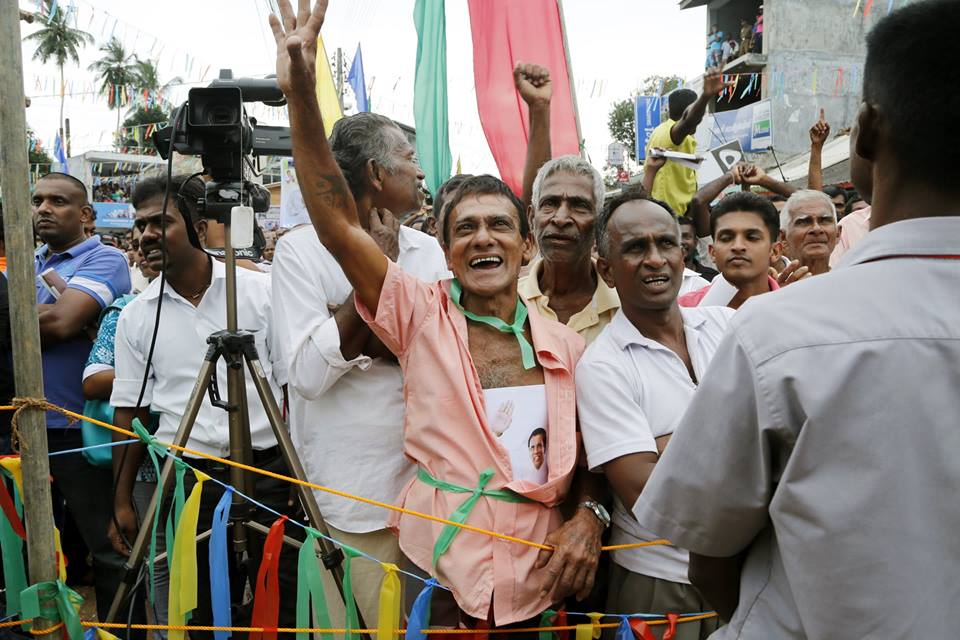 With all these developments in the political system, today we have arrived at a new historical juncture. After defeating a regime which was obsessed with propagating racism and religious fanaticism, demolishing democratic institutions and finally leading the country towards a fascist system, we could breath freely now. Yet, as the civil society we have no time left to rejoice; since we will not have achieved anything until we make sure that democratic system is reformed and the politicians adopt democracy as their daily philosophy. Therefore it is essential that we keep vigilant that the civil society struggle remains active and it further guides the current regime towards necessary reforms.Read More