

National Government: Presidential Election Betrayed

By Sumanasiri Liyanage -March 23, 2015
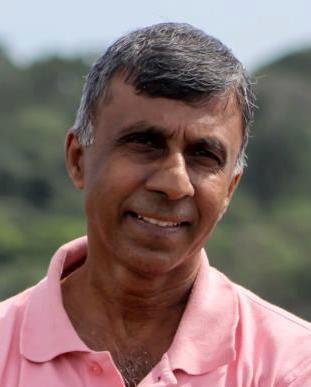
Sumanasiri Liyanage
Spinoza once said, “those who laugh last, laugh best”. People who voted to defeat Mahinda Rajapaksa regime out of power on January 8 might have celebrated their victory. However, even before passing magical 100 days, many of them may be thinking the change is just a chimera. New Ministers, State Ministers and Deputy Minister were sworn in making the size of the cabinet of ministers to 44. If you add the number of state minsters and deputy ministers the total number may be closer to the number of ministers in the MR regime. As The Island reported, “The number of Cabinet, State and Deputy ministers rose to 77 yesterday as 26 SLFPers were sworn in before President Maithripala Sirisena at the Presidential Secretariat.” In this sense and in many others, Maithripala-Ranil (that I call MR II) regime has no much difference from Mahinda Rajapaksa (MR I) regime. Even in the climax of war, Sri Lanka did not have a national government, nor during the Tsunami catastrophe. So one may justifiably ask: why now? For what? Prior to answer these questions, it is imperative to raise two points.
First, if we reflect on some of the views expressed by people who wholeheartedly supported Maithripala Sirisena candidacy on January 8, one thing is clear. All of them have already disappointed over the performance of the regime. The MR II regime has already shown political impotency, economic sterility and administrative incapacity so that it is highly unlikely to materialize what had been promised by Maithripala Sirisena during the election campaign. Although some prominent citizen oriented civil society practitioners hoped and expected that MR II regime would be essentially different from the MR I regime, in the context what has been happening now it is clear that more affinities than differences exist between the two. This convergence is clearly depicted by the formation of the so-called national government that is in fact a coalition between the UNP and the SLFP.
 Secondly, it is necessary to understand the nature of the MR I regime and its technologies and modalities of governance. Let me focus only on critical characteristics. Mahinda Rajapaksa preferred unipolar governance in a seemingly bipolar or multipolar political context. He did not want to crush the opposition, he in fact said that he stood for a strong opposition. Nonetheless, he used both the carrot and stick in order to weaken the opposition by inviting opposition members to the cabinet. He had occasional coffee with the leader of the opposition. The presence of formal bipolarity was not an issue for him. This technology of governance worked quite well with neo-liberal economic policies put into practice in a country in which democratic elections are a feature with of great importance.
Three demands that made Maithripala Sirisena candidacy attractive to a wide spectrum of peoples are: (1) relief from economic hardships (2) democracy and democratization and (3) good governance. However, it is necessary to keep in mind that these three demands were understood by different segments of society in different way. The way in which democracy and democratization was understood by the Internally displaced people in the North differed significantly from the way in which it was understood and interpreted by Colombo civil society. In spite of preparing 100 days or 180 days calendars, these three demand cannot be implemented fully within the neo-liberal economic framework. However, MR II like MR I has no option. The class configuration of the MR II regime may not be able to develop an alternative economic framework. Once again, it has resorted to loans from the private sector as well as from the international financial organizations. IMF has already warned that it will not lend money to this regime until and unless it shows ‘fiscal discipline’.
The formation of the so-called national government demonstrates how and in what way MR II regime has proposed its governance strategy. MR I weakened the opposition while MR II brought in both the government and the opposition under one rubric of the government, the President and the Prime Minister (Subha and Yasa as I mentioned in my previous article). So it was very logical to amend the draft bill of 19th Amendmentspecifically mentioning that the President would appoint both the PM and the Leader of the Opposition. As the Minister Rajith Senaratne informed us that the two parties would contest next election separately but to form once again a ‘united’ government reshuffling the members of the Parliament into government and opposition. Hence MR II is planning to strengthen the unipolarity that was one of the features of the MR I regime.
Can the so-called national government ensure democracy, good governance and relief for poor classes? In my opinion, the JVP Parliamentarian, Sunil Hadunneththi was absolutely correct when he told that this is an attempt to hide some of the malpractices and corruption of the politicians of the previous government and to prepare the condition for UNPers to engage in the same practices. The cabinet system of government is preferred against the presidential system of government primarily because the later brings in multipolarity into the system of governance. Democracy also needs independent MPs who do not belong to group politics. These two conditions were erased when the Second Republican Constitution of 1978 was enacted. JR had absolute majority in the Parliament while his successors had to maintain the majority in the Parliament by throwing carrots in the form of minister posts. It began with President R Premadasa. Maithripala Sirisena is adopting a different methods by bringing in both the government and the opposition under him using not only the Constitution but also the Constitution of the SLFP. Hence the national government is a naked attempt at redesigning neo-liberalist rule.
Soon after the announcement of the so-called national government, business community appears to have responded favorably. Ceylon Finance Today reported: “The formation of a national government as reported in the lead story of this newspaper on its yesterday’s (Sunday, 22 March) edition will augur well for the economy, market sources told Ceylon FT.
A national government will give the needed political stability to attract that much wanted foreign direct investments (FDI) in to the country, the sources said. That will lend stability to the beleaguered rupee, currently buffeted by depreciating pressure due to a combination of import demand, foreigners exiting from the government securities market and Government of Sri Lanka’s (GoSL’s) foreign debt servicing commitments.”
*The writer is the co-coordinator of the Marx School – e-mail: sumane_l@yahoo.com
