

The Lessons Sri Lanka Should Learn From South East Asian Financial Crisis


Mohammed Jehan Khan
South East Asia has come a long way since the financial crisis crippled the region nearly two decades ago. Even after the region has recovered from the crisis, post-crisis economies are still running at around 2-6% less than in the two decades before the crisis. The crisis affected economies are still confronting complex reform challenges.
During the last three decades certain Asian nations like South Korea, Thailand, Taiwan, Hong Kong, Singapore, Indonesia and Malaysia had made such rapid progress year after year, which earned them the moniker ‘The Tiger Economies’. These three decades of their tremendous growth averaging 8% a year had inspired pride at home and envy abroad. Never before had any economy sustained such growth for so long. Economists believed that in a century or two, these Asian giants would lead ahead of the USA’s and Europe’s economies. South Asian economic policies were presented as a model to the developing South American and African countries.
This miraculous economic progress achieved by these Asian countries was called ‘The Asian Miracle’. The sudden setback that befell them is the anti-climax of this miracle and it is therefore rightly called the ‘Asian Crisis’.
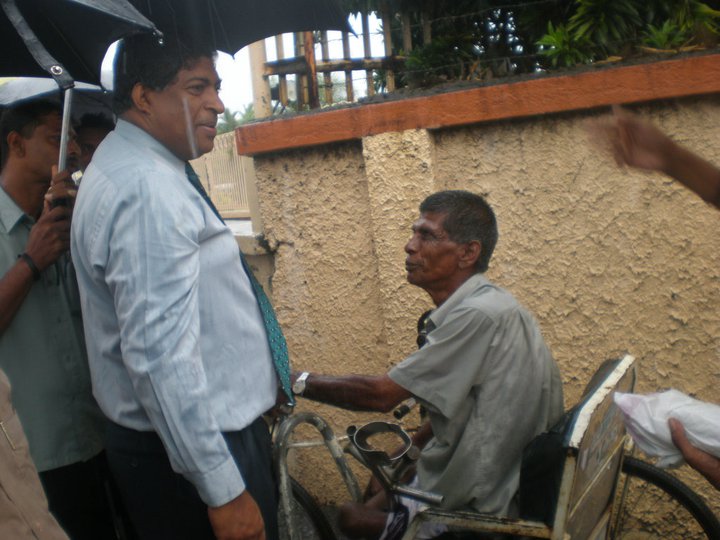
Ravi Karunanayke – The Finance Minister
Taking the case of Thailand, a country that had all the audacity to called itself an economic tiger, it was indeed a big come down. With the GDP growth averaging 7.2%-8% a year in the early 1990’s, the country was doing very well. Exports from the country were also at a healthy level and it was fast acquiring an enviable economic status. Then what went wrong?
The only mistake that the country had committed was similar to the mistakes that countries often make when they are flush with foreign capital. Instead of investing into industry or productive assets, Thailand spent it into high profile buildings in and around metropolitan Bangkok.
