

To A Secured Future Under ‘Maithri Rule’ For Our Biggest Minority Group

By Ajith C. S. Perera -February 22, 2015
For a secured brighter future as a developing country, today we are focusing a formidable and sustainable national economy.
It is thus imperative to arrest colossal economic and social waste that plague the country in untold proportions.
Two prerequisites here are: (i). Arresting the waste of human potential and instead mobilizing this asset and(ii). Minimising unwanted dependents through empowering, inclusion and equal opportunity.
Our Constitution Article (12.2) recognises race, ethnicity, religion, caste, gender and place of birth as non-discrimination states.
For a SINGLE REASON, that’s yet not included even under (12.3), continue to marginalise and discriminate the BIGGEST and the WIDEST sector of our population!!
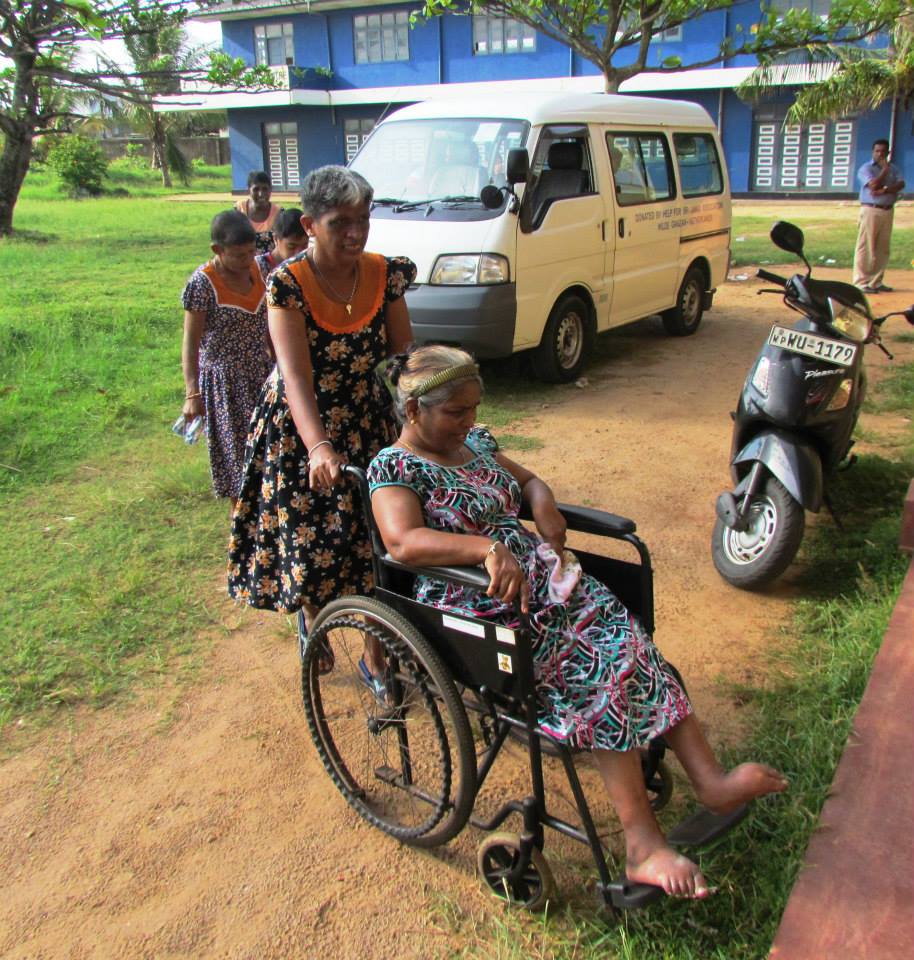 As such, amidst legislation, a diverse range of our population atleast 20% continue to cry louder over near twenty years concerning their marginalisation, exclusion and discrimination in day-to-day life.
They are the voters, not fewer thanfour (4) Million in number, those the inevitable accidents, debilitating illnesses, wear & tear of the body, etc., and the ended 30 years of war, have robbed of their abilitiesto see, walk, climb or even stand steadily, whether that be to a greater or lesser extent, whether permanently or temporarily.
The biggest minority group of Sri Lanka.
A Person with dis-Ability (often still termed injuriously as Differently-abled) legislation defines as: **Any person who, as a result of any deficiency in his physical or mental abilities, is unable by himself to ensure for himself, wholly or partly, the necessities of daily life**.
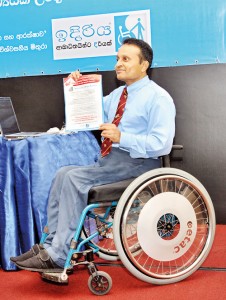
Dr. Ajith Perera
Sri Lanka has the fastest ageing population in our region. 17% of our population will soon be over 65 years.
Every one of us, inevitably, undergoes a process of decay, often meets numerous debilitating conditions or is convalescing after surgery or illnesses.
Almost all of us, thus, is certain to spend some of our time living with deficiency in ability, in moving and seeing, physical coordination, manual dexterity, etc.
All this means, more than one in five, experience deficiency in mobility.
World views and perceptions, thus, on what it means to be dis-Abled have changed rapidly and changed for the better to enhance equally the quality of life of ALL people.
The focus hence, is on **Persons with RESTRICTED ABILITY**.
However, for this fast increasing biggest minority group, the degree of their mobility should never be a disadvantage caused by physical and architectural barriers. Everyday activities should NOT become a daunting task to accomplishRead More
