

Case For Public Control In Higher Education: Some Heretical Thoughts
By Sumanasiri Liyanage –
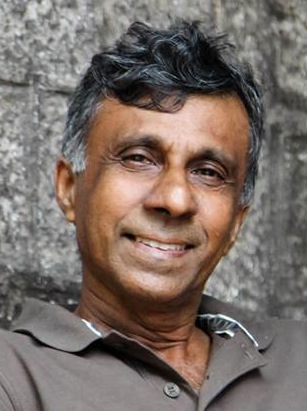
Sumanasiri Liyanage
 When state controlled educational system failed to
  deliver, privatization or private involvement in education has been proposed everywhere as a solution to the problem. This phenomenon is associated with the rise of neoliberalism. Sri Lankan discourse on higher education in the last decade or so has centered around three key issues. The first question has been focused on the inadequacy of higher educational opportunities that the state university system is capable of providing for young people who wish to continue their education after GCE A/L examination. The total yearly intake of the state universities are around 25,000 that is much less than the number of students who are qualified for higher education. The second issue is related to the quality of the degrees offered by the state university system. It has been said that there has been a gradual deterioration of the quality of university education so that the university degree holders are not fit well for the needs of the job market. Both issues are directly related to the low level of government expenditure on education that stands below 2 per cent of the GDP. The third issue refers to the bias of the Sri Lankan higher education system towards social sciences and humanities. This bias has been seen as the main source of unemployment of graduates.Read More
The Post-Rajapaksa Bravery
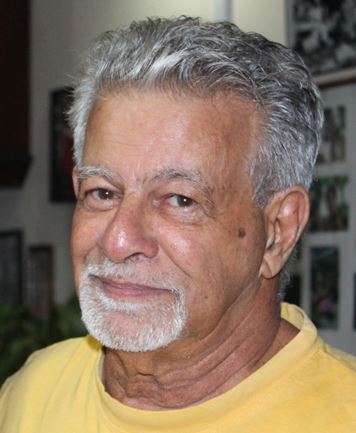
Emil van der Poorten
The post-Rajapaksa bravery of some political commentators and my personal experience
I recently had, from an old friend in Australia, an email suggesting that I could begin writing quite freely to the media again because I had been tempting fate while the Rajapaksas were ruling the roost by writing critically of their government and that this threat was now behind us. The suggestion was that, ultimately, I had succumbed to pressure from my friends and family and gone silent and I should now take up cudgels again.
I found this quite interesting, not to say bemusing, in the context of what has really been the case for Sri Lankans with journalistic pretensions both before and after the removal (however temporary) of the Rajapaksa monstrosity from the body politic.
Many of those seemingly exhorting me to “again” begin writing to the mainline English language press, seemed totally unaware that newspapers in that category – with the exception of the Sunday Island, headed up by one of the few principled journalists in the country – had “shunned” me for the longest time for coming across as “anti-Rajapaksa” and, for that reason, likely to be a stain on their “national loyalty” escutcheon. Their need to demonstrate overall fealty to our Ultimate Leader while pretending at ethical objectivity in journalism was the name of the game. Long before I began a four-year association with the Sunday Leader, after the death of Lasantha Wickrematunge, and until Frederica Jansz was driven into exile, I had contributed columns on a regular basis to several English language newspapers. In fact, the first of these was Lakbimanews, then edited by the indescribable (more appropriate terms come to mind, but…) Rajpal Abeynayake. That association ended when he insisted on sending me a cheque made out to the pseudonym that I used for those columns which bore no resemblance to that carried by anyone in Sri Lanka, leave alone the first and last names to which I answered! Given the established character of Mr. Abeynayake, I think I need hardly suggest the motivation for this irrational behavior.Read More
