

Fonseka told by his Army followers not to join govt.
- Friday, 26 December 2014
 Democratic Party leader, former Army commander Sarath Fonseka has been told by top military officers, who had left the service along with him and are looking after him while being in exile, not to join the government under any circumstance.
However, former deputy leader of the DP Jayantha Ketagoda is gradually getting people’s representatives of the party to join the government. Today (26), he took nearly 10 people’s representatives of the DP to Temple Trees in order to strengthen the hands of the president.
Ketagoda has assured the president that as is his promise, he would bring Fonseka to the government fold before the presidential election, after getting other DP members to cross over.
He has also said that he has handed over the speech he has drafted for Fonseka to deliver once he joins the government. Ketagoda has explained to the president the content of that speech, according to which, Fonseka is to say that he is leaving the opposition alliance to protest the blatant betrayal of the war heroes who had rescued the motherland from the LTTE and that he was totally unaware of the content of the secret agreement signed by Ranil and Maithri. However, that speech will not say Fonseka will support the government, and will only ask the people to defeat the Ranil-Maithri agreement.
After getting to know about this somehow, his military followers have stressed to Fonseka not to jump into the abyss which Tissa Attanayake had jumped into, after January 08.
Fonseka on December 24 had lengthy discussions about this with opposition leader Ranil Wickremesinghe and former president Chandrika Kumaratunga, where he said that he felt that his party and himself were being sidelined from the common opposition candidate’s election campaign (Tissa Attanayake too, felt the same way just prior to leaving the UNP). In response, both Ranil and Chandrika have told him that no one had demeaned Fonseka or his party. A senior MP of the UNP told us that all issues Fonseka had have now been resolved through discussion.
Previous articles
The New Class In Sri Lanka

By A. M. Navaratne Bandara -December 25, 2014
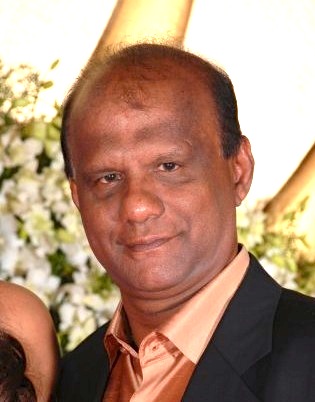
Prof. Navaratna Bandara
“Man cannot fight or live outside of society. This is his immutable characteristic, one which Aristotle noted and explained, calling it ‘political being.’” Djilas, M. The New Class, p. 157
Prelude
In the last four decades or so, the people of Sri Lanka have witnessed a process through which politicians are emerging as a class that has established primacy over all other sectors in society. The most visible feature of this class is, that when in power, its members are able to appropriate a large portion of the national wealth by using their collective political power as a form of property.
What has taken place in the Sri Lankan political system is an emergence of a new ruling class as envisaged by Milovan Djilas who participated with Marshal Tito in the Yugoslav Revolution and was later one of his ministers. In his famous book New Class Djilas presented a theory that contradicted the claims of the then ruling communists who argued that their revolutions and social reforms had resulted in the extinction of any ruling class. Djilas’ observation as a member of a communist government in Yugoslavia was that “the communist party members, by using the collective political control that they exercised over the state system, had established a specific relationship to the means of productionand stepped into the role of the ruling class”. He argued that the collective political power that was being exercised by the ruling party members had become a ‘property form’ enabling the ruling party leaders to extract a considerable portion from the production process. Djilas identified this class as a problem which he believed should be corrected through a revolution. This revolution came and swept away the communist regimes in Eastern Europe in the 1990s.Read More
