

International Community Is Hoping For A Regime Change After The Presidential Elections

Veluppillai Thangavelu
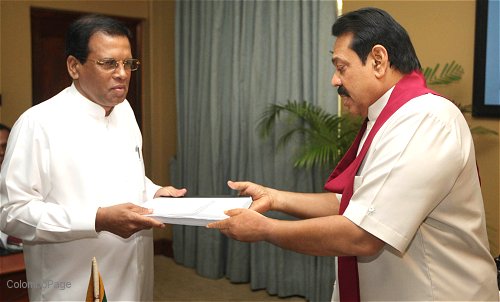
 After days and weeks of dilly dallying, President Mahinda Rajapaksa has at last signed the proclamation declaring the presidential election will be held next year. “I am declaring a secret today. I have signed the proclamation calling for the election for re-election for the third time… That is democracy,” Rajapaksa said, addressing a gathering on state television.
 Although President Rajapaksa signed the proclamation the exact date of the election is still to be determined. The date, as in the past, is normally fixed by astrologers and not by the Commissioner of Elections. The astrologers fix the auspices date after consulting the horoscope, the 12 planets (sun is included as a planet although it is a star) lunar phases, 27 constellations, 12 signs, 12 houses, transits, progression etc. It is a reflection on third world country politicians who foolishly rely more on distant heavenly bodies than eligible voters.
 Thanks to the 18th Amendment President Rajapaksa is seeking a third term in office, two years ahead of completing his second term. He resorted to the same tactic in 2010 when he went for the elections two years in advance of his first term. The current term commenced on November 19, 2010.
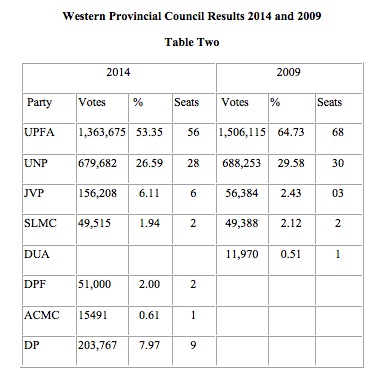
After the Uva and Western Provincial Council elections Rajapaksa must have realised the fact that popular support for the United Peoples Freedom Alliance (UPFA) was on the decline. Although Uva is a traditional strong hold of the opposition United National Party (UNP), yet the election results must have jolted both the ruling party and President Rajapaksa. Compared to the Provincial Council election held in 2009, 2014 results was a definite set back for the ruling party.
In Uva Provincial Council, though the ruling UPFA remains the largest party with an overall majority of 19 seats, that is down from 25 seats in 2009. The percentages show a larger fall than the seat count. In Moneragala, one of two districts in the province the UPFA vote tumbled from 81.32% in 2009 to 58.34% in 2014. Overall the UPFA vote fell from 71.77% in 2009 to 48.79% a decline of a staggering 22.98%. The following Table shows how the government vote bank gradually shrank in terms of number of votes polled and seats secured between 2014 and 2009.
