

Towards A Family Policy Beyond Nepotism

By Sajeeva Samaranayake - October 11, 2014
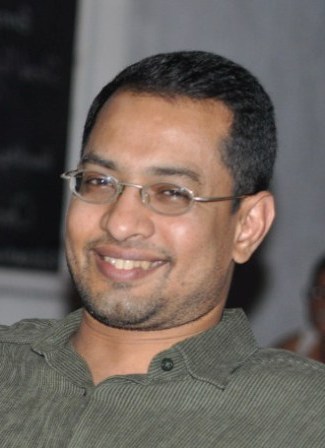
Sajeeva Samaranayake
Since 2010 the Ministry of Social Services has been engaged in the development of a family policy for Sri Lanka. At face value this is a laudable task and one that should be supported by all. On closer examination however a number of fundamental issues arise which cannot be ignored if this exercise is to benefit its intended beneficiaries – those families which are struggling to make ends meet and live together and which are disintegrating as mainstream ‘development’ gathers pace with elements of ‘social engineering’ also thrown in.
Why a family policy?
State provision for families in Sri Lanka is now in a completely fragmented and scattered state. Areas like housing, transport, utilities, health, education, social services, probation & child care services are all divided and sub divided beyond all human attempts to bring them into a sane degree of coordination. Given this reality we must question the rationale of the Ministry of Social Services (MoSS) – the official body that is entrusted with the care of human beings largely beyond the pale of all other services – attempting an ambitious exercise like a ‘family policy’ when its actual mandate is limited to the rejects of society. In short what happens to many families is ‘pre-decided’ by policy decisions and other exercises of power that take place outside the ambit of influence of the MoSS. The MoSS as we know is simply there for the societal task of garbage disposal or garbage retention out of sight of the glitzy new metros that will soon adorn the island. What value can yet another policy document achieve within this scenario? Should the focus not be on more limited and strategic objectives that are doable within our limited capacity and resources? As professionals working for the deprived and vulnerable we should not waste time on abstract exercises which have no connection to the harsh realities of the world outside. There are other questions as to who wanted this family policy and why. There is no pretence that a weighty exercise of this nature looking into our fundamental social unit has mobilized sufficient social or political backing for its success. It has not. A piece of research on families exists giving an ostensible basis for the exercise but ‘data’ cannot take the place of living people who must be engaged openly, inclusively and democratically. The preparation of a family policy for a nation cannot be a technical exercise given over to ‘consultants.’Read More
Law; The Language Of The Elite

Lakmali Hemachandra
“Mr.Gajapathy, there are blacker sins in this world than a dropped vowel….” - R. K. Narayan, The English Teacher
The Legal Council of Sri Lanka has made a decision to hold its examinations only in English, meaning Sinhala and Tamil medium students of Sri Lanka Law College will now be required to answer for papers in English, meaning a majority of students of Sri Lanka Law College will now be compelled to understand and write in a language that most Sri Lankans are not very familiar with, the colonial ghost that we all revere, English.
The argument against this decision is very plain, it violates the language rights of hundreds of current students of the Law College and thousands of future students who will be barred from entering into the Law College for the abominable crime of not knowing English, the source of all knowledge as most elite Sri Lankans mistakenly believe. The legal case against this decision can be explained using two articles in the Constitution, Article 12 and Article 18. Article 18 of the Sri Lankan Constitution declares Sinhala and Tamil to be National Languages of the country while adding that English will be a linking language. That should be enough to demand that the Law College wake up to the post independent Sri Lanka and to conduct its activities in both Sinhala and Tamil languages, declared National Languages under the Constitution. Article 12 of the Constitution guarantees that no personal shall be discriminated based on language, which has to mean that it is wrong and unconstitutional to make English a condition in entering the legal profession. In my simple knowledge of the law, that is discrimination based on language. Ironically, in this country we think that Sinhala is the language of the privileged majority and provisions like this are there to protect Tamil people from being discriminated. However, Law College and the Legal Council are making it abundantly clear as to the real language of the elite and the privileged, at least in law.Read More
