

Rajapaksa 'politically vulnerable' ahead of early Sri Lanka polls

- Date 22.10.2014
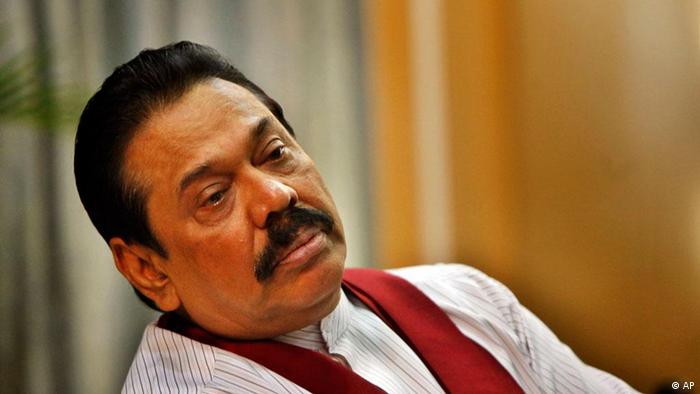
Nearly two years ahead of schedule, Sri Lanka will go to the polls in January, with Mahinda Rajapaksa set to run for a third term; a move likely triggered by the President's fading popularity, says analyst Alan Keenan.
"There will be presidential elections in January," Cabinet spokesman Keheliya Rambukwella said on October 20, failing to name an exact date. The move is seen as an attempt by President Rajapaksa to seek a fresh six-year mandate amid signs of fading popularity.
Rajapaksa, who first came to power in 2005, scrapped the two-term limit on the presidency soon after winning re-election in 2010. The 68-year-old is under intense international pressure to probe war crimes allegations and promote reconciliation with the country's Tamil minority following a decades-long civil war. He has also been accused of rights abused and nepotism.
In a DW interview, Sri Lanka expert Alan Keenan says there is growing discontent at the high cost-of-living and lack of an economic peace dividend in Sri Lanka, with many analysts arguing that while Rajapaksa is still the clear favourite, the longer Rajapaksa delays the next election, the smaller are his chances of victory.

Keenan: 'The longer Rajapaksa delays the next election, the smaller his chances of victory.'
DW: Why would President Mahinda Rajapaksa call a snap election Sri Lanka nearly two years ahead of schedule?
Alan Keenan: President Rajapaksa and his advisors appear worried by the relatively poor showing of his United People's Freedom Alliance (UPFA) in recent provincial elections. While the UPFA gained a slim majority in the Uva province in September, its share of the vote fell dramatically from preceding elections, with the main opposition United National Party running a surprisingly strong campaign. While Rajapaksa is still the clear favourite, most analysts believe that the longer Rajapaksa delays the next election, the smaller his chances of victory.
Why is Rajapaksa's popularity fading?
There is growing discontent at the high living cost and a lack of an economic peace dividend, despite the regime's numerous post-war Chinese and Indian-funded infrastructure projects. Corruption, including among members of the Rajapaksa family, is widely believed to have reached unprecedented levels.
The president's popularity is further damaged by concerns over the rise in violent crime and abuse of power by ruling party officials at all levels of government. Rajapaksa has never been popular among Tamils, and support among Muslims is evaporating in light of the government's continued tolerance of the violent anti-Muslim campaign led by the militant Buddhist groups.
There seems to be some controversy as to whether Rajapaksa is legally entitled to run for a third term. What is your view on this?
