

Sri Lanka Dictates – New UN HCHR Must Work In Its Favour

By S. V. Kirubaharan -September 4, 2014
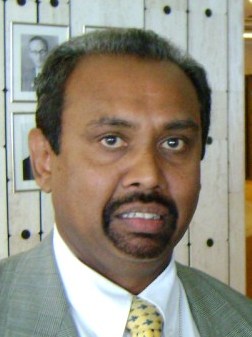
S. V. Kirubaharan

Sri Lanka should understand the fact that international law is not like the present judiciary in Sri Lanka. Whether the HCHR is Louis Arbour, Navanethem Pillay or Prince Zeid Ra’ad Zeid Al-Hussein, she or he will not work on the basis of their own ethnic identity. These human rights VVIPs look at every global situation through the lens of international law.
Louis Arbour was the first UN HCHR to bring Sri Lanka’s human rights violations to the attention of the international community. For this reason, Sri Lanka slandered her. Then it was Navanethem Pillay’s turn. Maybe later Prince Zeid Ra’ad Zeid Al-Hussein will face the same insults.
Sri Lankan officials are looking for venues where they can butter up the new HCHR. In fact they did the same with Navanethem Pillay. When she assumed her duties on 1st September 2008, Sri Lanka government representatives were the very first government team to meet her – within four days in office on 5th September 2008. They took photographs for their publicity. But her adherence to the standards of international law ensured that Navanethem Pillay never got caught to their buttering up. She never ignored the human rights violations, crimes against humanity and the genocide continuing in Sri Lanka. Read More
The Third Narrative; The Last Stages Of The War In Sri Lanka
By R.M.B Senanayake -September 4, 2014
R.M.B. Senanayake
On the 29th August the Marga Institute launched its book - “Issuesof Truth and Accountability: Narrative III .The Last Stages of the War in Sri Lanka”
It was reviewed by a panel of speakers some of whom were personally aware of some of the incidents or the underlying policies of the Government. Others had studied the book had studied them. Mr. Rajiva Wijesinha gave a critical view of the evolution of the policy dubbed the Second Narrative which was the official stand of the Government and is contained in the report of the Ministry of Defense “Humanitarian Operation : Factual Analysis” . The First Narrative reflected the thinking and views expressed or unpublished, of the UN Agencies, the Human Rights Organizations and other liberal thinkers in the West which constituted the Liberal perspective based on the UN Declarations and the Geneva Conventions. They are the Report of the Panel of Experts (POE) appointed by the UN Secretary General in 2011 and the Report by the International Crimes Evidence Project (ICEP) undertaken by the Public Interest Advocacy Center. The book says both narratives were flawed. The Third Narrative says “each of the two investigating bodies was unable to gain full access to the evidence available to the other”. The witnesses who appeared before the UNSG’s Panel including the UN personnel, INGOs and others did not appear before the LLRC. The POE did not have access to the main actors as the Sri Lanka Government (GOSL) refused to allow in the POE. Hence the book says there is a need for a Third Narrative which seeks to take a more balanced view o the circumstances of the war and the alleged violations of the Humanitarian Law taking into account sources such as the reports of the University Teachers of Jaffna and secret diplomatic messages revealed by WikiLeaks. Read More
