

Sri Lanka And Ari Shavit’s ‘My Promised Land: The Triumph And Tragedy Of Israel’

By Charles Sarvan -September 20, 2014
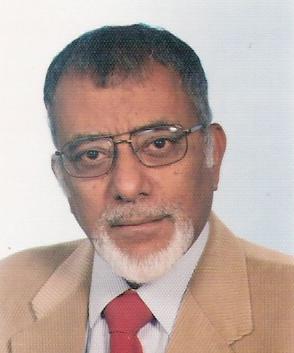
Dr. Charles Sarvan
“Woe unto them that join house to house, that lay field to field, till there be no place” (Isaiah 5:8)
 The Israel - Palestine conflict is many decades old and seems intractable. It’s a constant haemorrhage with one side losing far more “blood” (both literally and figuratively) than the other. Periodically, violence peaks and it’s headline news, such as during the recent ‘incursion’ into Gaza when hundreds of Palestinian civilians, children and women included, were killed. The landscape of destroyed houses and buildings in Gaza was like that of several other cities we have seen destroyed thanks to ‘progress’ and modern warfare’s horrific capacity to destroy and ravage. Rabbi Michael Lerner lamented (4 August 2014), Israel has broken my heart: I’m a rabbi in mourning for a Judaism being murdered by Israel. My heart is broken as I witness the suffering of the Palestinian people and the indifference of Israelis ( see )
(For Sri Lankans to appreciate the force of this statement, they must imagine: “Sri Lanka has broken my heart. I’m a Buddhist monk in mourning for a Buddhism being murdered by Sri Lanka”.) It’s in this context that I draw attention to the above work, a best seller described as one of the most important books about Zionism. The author, born in 1957, once a member of an elite Israeli parachute unit; one who did guard-duty over Palestinian prisoners, is a peace-activist and a leading Israeli journalist. Read More
Border Aggression And Civilian Massacres In Sri Lanka

Dr. Rajan Hoole
Border Aggression and Civilian Massacres – Part 1
The day was 17 May 1985, the village Natpattimunai in the Eastern Province, and the headmaster Mr. T. Gunaratnam, a first class trained teacher 36 years in service. [His two sons abducted from home before his very eyes, were among the twenty three youths taken away from the village, never to be seen again.] There was, unfortunately, nothing very un- usual about this episode for the time and place. The Special Task Force (STF) was then de- ployed in the Eastern Province, and a frequent complaint was that young men were arrested by it and the arrest later denied. But people elsewhere, if they heard of such events at all, tended to shrug them off in disbelief. Or worse, to dismiss them from mind as an inevitable concomitant of the state’s campaign against armed Tamil separatists. Partly as a result, in our contention, of such indifference or lack of principled attitudes, later years would see such experiences replicated throughout the length and breadth of the land, the victims still pre- dominantly rural youth, but now including real or suspected Sinhala insurgents in their thou- sands….Today, fifteen years after the Natpattimunai round-up, it may be useful to remind our- selves of the time and circumstances under which “disappearing” people was able to estab- lish itself in Sri Lanka as part of the modus operandi of the forces of law and order, and to ponder on its consequences and implications. - Suriya Wickremasinghe, from “Disappearances” As A Practice, Pravada December 2000 Read More
