

Remembering Rajani
 Rajani Thiranagama Commemoration, 20-21 September 2014 in Jaffna
Dr. Rajani Thiranagama, a prominent human rights activist and author, a medical doctor, and head of the Department of Anatomy at the University of Jaffna, was assassinated near her home in 1989 at the age of thirty-five. Her death was an immense tragedy for the community and was symbolic of a climate of terror and human disregard that ultimately left hundreds of thousands dead throughout the country. Rajani’s death represented a moral crisis within the community, and a crisis of governance and education that continues to mar our future.
Rajani Thiranagama Commemoration, 20-21 September 2014 in Jaffna
Dr. Rajani Thiranagama, a prominent human rights activist and author, a medical doctor, and head of the Department of Anatomy at the University of Jaffna, was assassinated near her home in 1989 at the age of thirty-five. Her death was an immense tragedy for the community and was symbolic of a climate of terror and human disregard that ultimately left hundreds of thousands dead throughout the country. Rajani’s death represented a moral crisis within the community, and a crisis of governance and education that continues to mar our future.
 A Tamil from northern Sri Lanka, she married a Sinhala political activist from the south, and despite being aware of the dangerous consequences of speaking out, chose to remain in the north with her people. She was one of the founding members of the renowned human rights group UTHR-J (University Teachers for Human Rights Jaffna) and the co-author of their book The Broken Palmyrah, which exposed the atrocities committed by all parties to the conflict, including the Sri Lankan armed forces, the Indian Peace keeping Force and armed groups such as the Liberation Tigers of Tamil Eelam (LTTE) and other militant movements. Rajani was also at the forefront of establishing Poorani, a home for women in Jaffna, who were rendered destitute by the threatening and constraining conditions of war in the north of Sri Lanka. As a feminist and social activist, Rajani strove hard to create spaces for women’s collective action. After Rajani’s assassination, two of her co-authors, Rajan Hoole and Kopalasingam Sritharan, and fellow members of the UTHR-J, have continued to report on the human rights situation in Sri Lanka, inspired by Rajani’s memory and determination. Forced to remain underground since Rajani’s death, UTHR-J are one of the few non-partisan voices in Sri Lanka. In 2007 they were awarded the prestigious Martin Ennals Human Rights Award.
Democratic societies, democratic practices, an equal and just world!
Rajani remains an inspiration and symbol of hope to many in Sri Lanka who desire a just peace with democracy and dignity for all. We hope to explore spaces for a democratic practice in which people are able to participate. The post- war period offers us space to focus on the needs, aspirations and self-expression of people who have been dispossessed during the long period of war and in the current context of development and post-war reconstruction. We wish to honour Rajani’s memory with a series of events on the 20th and 21st of September. We earnestly request your presence at these events as both a show of solidarity with the people of Jaffna and all those gathered in the name of democracy at this crucial juncture of our shared history.
Solidarity for peace, democracy and the marginalized!
Support political and social practices for a new society!
Proposed events
A Tamil from northern Sri Lanka, she married a Sinhala political activist from the south, and despite being aware of the dangerous consequences of speaking out, chose to remain in the north with her people. She was one of the founding members of the renowned human rights group UTHR-J (University Teachers for Human Rights Jaffna) and the co-author of their book The Broken Palmyrah, which exposed the atrocities committed by all parties to the conflict, including the Sri Lankan armed forces, the Indian Peace keeping Force and armed groups such as the Liberation Tigers of Tamil Eelam (LTTE) and other militant movements. Rajani was also at the forefront of establishing Poorani, a home for women in Jaffna, who were rendered destitute by the threatening and constraining conditions of war in the north of Sri Lanka. As a feminist and social activist, Rajani strove hard to create spaces for women’s collective action. After Rajani’s assassination, two of her co-authors, Rajan Hoole and Kopalasingam Sritharan, and fellow members of the UTHR-J, have continued to report on the human rights situation in Sri Lanka, inspired by Rajani’s memory and determination. Forced to remain underground since Rajani’s death, UTHR-J are one of the few non-partisan voices in Sri Lanka. In 2007 they were awarded the prestigious Martin Ennals Human Rights Award.
Democratic societies, democratic practices, an equal and just world!
Rajani remains an inspiration and symbol of hope to many in Sri Lanka who desire a just peace with democracy and dignity for all. We hope to explore spaces for a democratic practice in which people are able to participate. The post- war period offers us space to focus on the needs, aspirations and self-expression of people who have been dispossessed during the long period of war and in the current context of development and post-war reconstruction. We wish to honour Rajani’s memory with a series of events on the 20th and 21st of September. We earnestly request your presence at these events as both a show of solidarity with the people of Jaffna and all those gathered in the name of democracy at this crucial juncture of our shared history.
Solidarity for peace, democracy and the marginalized!
Support political and social practices for a new society!
Proposed events
- 20th September, 9:30am – Rajani Thiranagama Commemoration Meeting at the Medical Faculty, University of Jaffna.
- 20th September, 2pm – A procession for peace, democracy and social justice. (Starting at the Medical Faculty, University of Jaffna and ending at Veerasingham Hall with a short meeting.)
- 21st September, 9am – A seminar on “A more just and democratic society”, at Kailasapathy Hall, University of Jaffna.
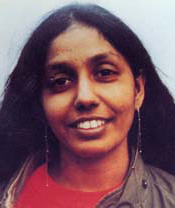 A Tamil from northern Sri Lanka, she married a Sinhala political activist from the south, and despite being aware of the dangerous consequences of speaking out, chose to remain in the north with her people. She was one of the founding members of the renowned human rights group UTHR-J (University Teachers for Human Rights Jaffna) and the co-author of their book The Broken Palmyrah, which exposed the atrocities committed by all parties to the conflict, including the Sri Lankan armed forces, the Indian Peace keeping Force and armed groups such as the Liberation Tigers of Tamil Eelam (LTTE) and other militant movements. Rajani was also at the forefront of establishing Poorani, a home for women in Jaffna, who were rendered destitute by the threatening and constraining conditions of war in the north of Sri Lanka. As a feminist and social activist, Rajani strove hard to create spaces for women’s collective action. After Rajani’s assassination, two of her co-authors, Rajan Hoole and Kopalasingam Sritharan, and fellow members of the UTHR-J, have continued to report on the human rights situation in Sri Lanka, inspired by Rajani’s memory and determination. Forced to remain underground since Rajani’s death, UTHR-J are one of the few non-partisan voices in Sri Lanka. In 2007 they were awarded the prestigious Martin Ennals Human Rights Award.
Palmyra Fallen: Rajani To War’s End
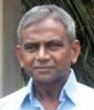
Rajan Hoole
25th Anniversary of the Assassination of We are living through an era where the powers that be have become very cynical about life. In their very nature it suits them to dismiss any attempt to remember one life lost or to seek justice for one killed as wasting time over a single speck among tens of thousands who suffered a similar fate. They know that to go deep into any one death, to expose culpability and explain the irreparable harm it does to all of us, is to place the edifice of power on trial. That is why the memory of Rajani is so important; she was just such a person who insisted that the memory of every person who was a victim of organised, institutional violence was sacred, and that the whole truth should be placed on record for the people to judge. The public values she espoused, worked, and died for, are an important
part of our heritage, particularly of left activism, that are an inspiration to those who come after her.
Left activism was always important in mobilising the marginalised and giving them a voice – in particular the oppressed castes throughout the country and the Hill Country Tamils. Today, when the need for such activism is even more keenly felt, people have no stomach for it. Former left activists in the South see a hopefully reformed UNP as the only hope against a Rajapakse-led SLFP. Among Tamil leftists there is the despondency that makes one feel that one cannot make any impact in politics without an alliance with the nationalist TNA to alleviate the tragic plight of the Tamils, even as it is eminently answerable for this plight.Read More
