

18 Amendment And Cabbages And Kings

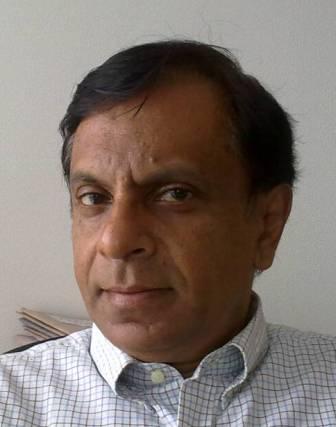
Ravi Perera
“Disorder was the order of the age, ideas a precious food; with humour always dressed in tears, crunching a red apple. Disorder flashed vivid as a fire in a far-off village, a wan wind blew in the crumbling castle”- Takashi Tsujii (Age of Disorder-New writing in Japan)
It is emblematic of today’s Sri Lanka that we are left uncertain and confused even as to whether the incumbent President is entitled to contest for the post a third time. Not that Sri Lankans are strangers to constitutional quibbling, uncertainty or confusion. In fact the whole scheme of affairs in this country seems to be designed to keep the people guessing as to what is in store for them each day and every step of the way. But what is particularly bizarre about this situation is that the whole country is aware, cloaked by constitutional jargon as it maybe, that this particular amendment was moved to enable one man and one man alone to be eligible, even after serving two terms as President.
It is now argued by none other than the former Chief Justice Sarath Silva himself, that the 18 amendment to the Constitution cannot be used by the incumbent President Mahinda Rajapaksa to throw his hat in the ring again. So sure is he of his position that the former Chief Justice says quite portentously that he will argue the matter personally in the Supreme Court. We cannot say how the courts will react to his arguments. One of the assumptions on which our edifice of justice rests is that a court of law will not be unduly influenced or overawed by the personality of the advocate or that of the parties.
In 2010, when the 18 amendment went before the Supreme Court, it did not think that the opinion of the people ought to be sought by way of a referendum on a matter which notably altered the scheme of the Constitution and the franchise. Arguably, the two term limit on the incumbency was a restraint on the possibility of the continuous abuse of the process. The wisdom of such a limit, particularly in an under-developed democracy, is underlined by the events unfolding in countries such as Egypt and Syria. In these countries the incumbent had no difficulties in obtaining electoral endorsements repeatedly. The “grateful” peoples of Egypt and Syria were seemingly even willing to accept the spoiled sons of leaders like Hosni Mubarak and Al-Assad as their rightful leaders. It is perhaps a pointer to the abject quality of its institutions that an Egyptian court recently moved to sentence to death more than 500 of the ousted President Morsi’s supporters. Obviously elections alone cannot make a democracy, leave alone a decent society. Read More
