British Govt. Calls Upon Sri Lanka Again To Sign UN Declaration Of Commitment To End Sexual Violence In Conflict
 July 25, 2014
The British Government has expressed grave concerns over the culture of impunity prevailing in Sri Lanka forrape and sexual violence and has once again called upon the Government of Sri Lanka (GoSL) to sign up to the UN Declaration of Commitment to End Sexual Violence in Conflict.
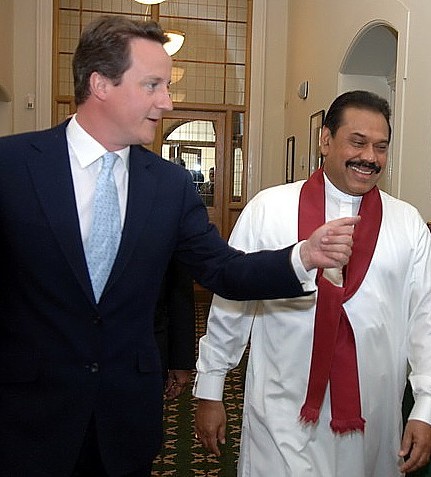
David Cameron and Mahinda Rajapaksa | File photo
The South Asia Department of Foreign and Commonwealth Office in UK in a letter to theTransnational Government of Tamil Eelam (TGTE) yesterday has expressed concerns over the reports of a culture of impunity for rape and sexual violence and a lack of support for victims in Sri Lanka both during and after the conflict.
These calls are made just days after a group of Naval officers attached to the Karainagar Navy camp accused of raping a 11 year-old for 11 days were released on personal bail earlier this week.
While stating that the British government remains concerned over the recent NGO reporting that have particularly highlighted instances of sexual violence in the post conflict era, the statement further asserts that significant action has already been taken by the British government on the issue to which includes:
- Hosting an event to highlight concerns of sexual violence in Sri Lanka by Foreign Secretary William Hague during his visit for CHOGM in 2013 where calls were made upon Sri Lankan authorities to hold an independent and credible investigation on the allegations of sexual violence committed by Sri Lankan forces during and after the military conflict
- Sponsoring the UNHRC resolution on Sri Lanka in March this year that has expressed serious concerns at the continuing reports of sexual and gender based violence
- Supporting projects to ensure a zero-tolerance to rape and sexual violence in Sri Lanka including establishing a helpline for victims of domestic abuse, training local media in investigative techniques that will help them shine a light on this issue and inviting Sri Lankan and international experts on gender issues and sexual violence in Sri Lanka for the Global Summit to End Sexual Violence held in London in June this year
Healing The Wounds: Working With The Diaspora
- By Rajiva Wijesinha - July 25, 2014
 Prof. Rajiva Wijesinha MP31 years after the tragic events of July 1983, there has still been no serious attempt to heal the wounds. They were grave wounds, and the effect they had still bedevils this country. Though many explanations are offered, some in an effort to justify what occurred, we must recognize that, as BishopLakshman Wickremesinghe put it, ‘The facts however cannot be denied. Thousand of Tamils, old and young, and even little children were assaulted; robbed, killed, bereaved and made refugees. They saw their homes, possessions, vehicles, shops and factories plundered, burnt or destroyed. These people were humiliated, made to live in fear and rendered helpless’This brutality led to the strengthening of the LTTE. Though we must all be glad that the terrorism the LTTE engaged in is now over, we must also make sure that the sort of terrorism that held sway in July 1983 is never repeated. And we need to understand why some still regret the extermination of the LTTE in Sri Lanka.One reason is the failure of the Sri Lankan state, following the victory of 2009, to affirm the equality of all its citizens and facilitate their full participation in governance. That must be changed, and we need to ensure full consultation of affected populations in planning for economic and social and political development. The election held for the Northern Provincial Council was a step in the right direction, but unless the constitutional provisions regarding the powers of the elected Provincial government are respected, we must expect disaffection. Read More