

Modi Victory For Sure And Approaches For Tamils
By S. Sivathasan -April 13, 2014
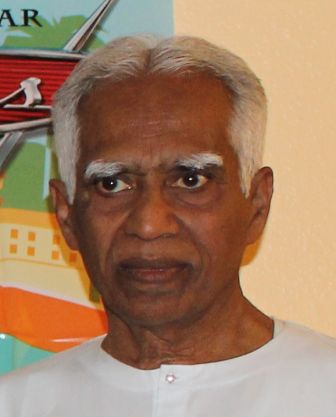
S. Sivathasan
 When a nation’s economic priorities demand rearrangement, political philosophy too turns colour. India has come to this nodal point. Kept back by indifference and indecisiveness, rapid growth is seen as the route to compensate for past default. The tempo of political change unleashing itself at the Lok Sabha election is now at fever pitch. For a fundamental change in the destiny of India, firstly party fortunes have to be reordered. In a nation of over a billion people, more than half a billion have begun to wield the powerful vote to realize a future of value and purpose.
The stance they are expressing is determining the strength of political parties. The country can see a drastic difference that is coming about. It is said that in any nation those with heightened social consciousness are about 6%. This translates to a compact entity of 50 million in India, among the most formidable one-sixth of the world’s adults. It is an upheaval spearheaded by them that the world is witness to. What has churned it has been adequately examined. It would suffice now to assess how power will be distributed by a populace that has lost its patience. How much concentration at the centre? What is the geographical spread?
In a constitutional arrangement where the winner takes all, how will that power be converted into authority? When the latter is extended to the far corners, how effective will it be at the extremities, say Kashmir and Kanniyakumari? Power will necessarily be stepped down compared to the generation centre that is Delhi. But how well can the transformers be primed? To what degree can conveyance losses be reduced? Facing a more knowledgeable intelligentsia, these are far greater challenges for Modi to manage, than they were for Nehru or Indira.
To analyze the correlation, first the seat apportionment to parties by the electors needs to be assessed. The most essential departure is to dislodge a party that has governed India for almost 85% of the time since independence. A decisive choice on this occasion falls on a party; the BJP that shared the opportunity for only 10% of the time. A close and sensitive look at the mood of the electorate conveys a very clear image of coming events. What is the pattern in this unfoldment?
