

Counter-Terrorism: Learning From The Sri Lankan Experience

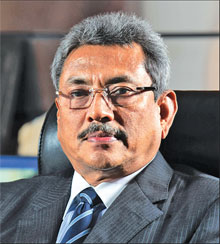
Gotabaya Rajapaksa
I thank the Malaysian Institute of Defence and Security for organising the Putrajaya Forum, which affords an invaluable opportunity for those involved in Defence and Security from many countries to discuss topics of mutual importance. This session, which examines the Influence of Non State Actors and their Impact on Global Security, essentially sums up much of the content discussed at this Forum over the last two days. Strengthening Security and Regional Stability in today’s context requires us to pay considerable attention to the emerging threats posed by non-state actors.
As a country that suffered three decades of ruthless terrorism, there is a great deal that can be learnt from the Sri Lankan experience with non-state actors. Described by the US Federal Bureau of Investigation as “among the most dangerous and deadly extremists in the world”, the LTTE was no ordinary terrorist group. Among its more than one hundred thousands victims were a serving President of Sri Lanka, a former Prime Minister of India, Sri Lanka’s Foreign Minister, Defence Minister and many other politicians and state officials including most moderate Tamil leaders, as well as tens of thousands of civilians. They attacked some of Sri Lanka’s most sacred places of religious worship, and many of the country’s most important economic targets including the Central Bank and the International Airport. At its height, the LTTE had more than 30,000 battle-hardened cadres and a large number of auxiliary forces; large stockpiles of modern armaments, ammunition and equipment; a sophisticated naval wing and a fast developing air wing. It effectively controlled large extents of the country’s territory and a considerable proportion of its coastline. It was a non-state actor of great power and reach, and it posed an extreme threat to Sri Lanka until its defeat in May 2009 through a military operation launched by the Government .Read More

 (Lanka-e-News-15.April.2014, 2.30 PM) Commander in chief of Jaffna, Major general Udaya Perera had made a statement to the Udayan newspaper published in Jaffna that the three so called LTTE leaders who were killed by the Rajapakse regime in the jungles of Nedunkarni were in the custody of the army three days prior to the killing. Its had in the Udayan Newspaper Published April 8th edition of this, is that the 11 TH On Three days Prior to the killings.